

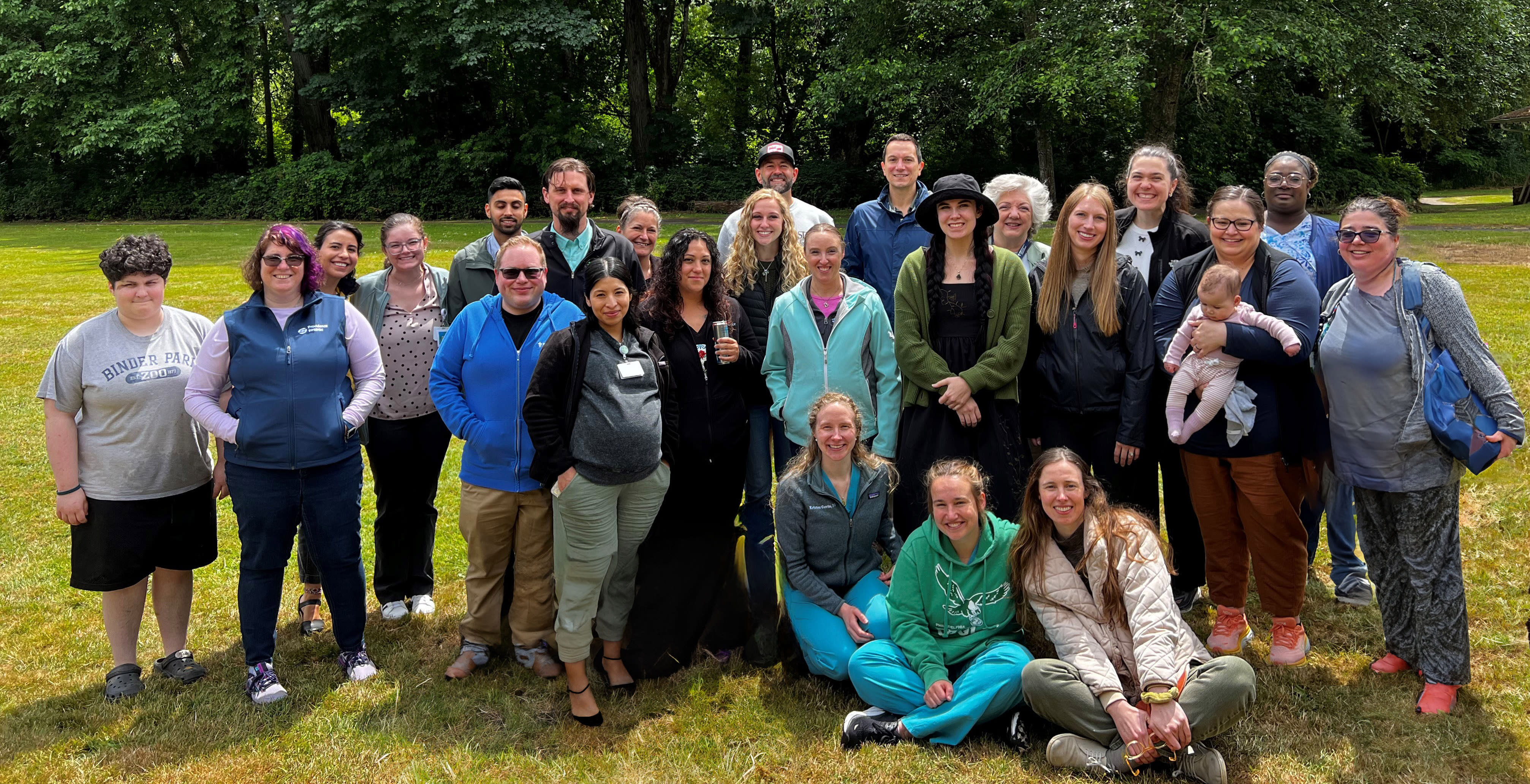
In the small town of Chehalis, Wash., Providence Swedish is helping redefine family medicine education with a focus on community service and comprehensive training. The Chehalis family medicine Rural Training Program is a pioneering initiative aimed at addressing health care needs in underserved areas while preparing future physicians for the varied challenges ahead.
The program's inception was driven by two physicians who also happen to be husband and wife: Program Director Miguel Lee, M.D. and Associate Program Director Rein Lambrecht, M.D. After completing their residencies in Massachusetts, the two shared a strong desire to continue their service to underserved populations. Together, they built the Rural Training Program from the ground up with the intent of combining the realities of practicing rural medicine with community impact.
“We wanted a place where we could teach as well as serve,” Program Director Miguel Lee, M.D., said. “We’ve always felt that, by being a practicing clinician, we could make a big difference if we trained residents to not only practice excellent medicine but also place a priority on social justice.”
Today, the faculty has grown modestly beyond Drs. Lee and Lambrecht to include three of the program’s graduates, including a pharmacy faculty member and a behavioral health specialist. Together, they’ve tailored the program to give residents the experience and skills to deliver whole-person care in places distant from urban cores. However, it's community involvement which leaves the most lasting mark on residents.
Residents collaborate with local organizations, offering essential services like the development of protocols for hepatitis C screening and treatment. The clinic also maintains a partnership with Providence Centralia Hospital, where patients can be referred for complex or medically necessary services such as labor and delivery. But Dr. Lee believes it’s their partnerships with substance use disorder clinics and the Lewis County Drug Court which are truly helping to transform this area of Southwest Washington.
“Taking care of patients who struggle with substance use disorder has always been a passion of ours,” Dr. Lambrecht said. “That’s a significant population that we take care of in rural Washington.”
“When we first started prescribing medications for addiction medicine, we found out that in the entirety of Lewis County, there was nobody who was taking Medicaid [patients] and also prescribing medications to treat substance use disorder, and this is why we did it,” Dr. Lee said. “It was brutal. We had patients coming up from Oregon. We had patients coming down all the way from Forks, Washington. And that's what we did. We saw and took care of anybody who walked through the door.”
Their work has become more foundational since those days. The faculty and residents helped a new substance use disorder clinic start-up.
“We gave them our experiences and kind of guided them through the initial stages of starting a clinic like that,” Dr. Lee said. “It was transformational for all of us.”
Dr. Lee said the program partnered with the Lewis County Drug Court to break the cycle of returning to substance use after incarceration.
“It was a revolving door, so we suggested a different approach,” he said. “These folks need treatment and a way to re-integrate into society. We offered to treat them and enroll them in a program that helps with mental health and their struggles and encourage them to go to college and find work.”
This approach is working. The program has graduated several residents who sometimes return to share updates, introduce their children or talk about their jobs.
Building strong local bonds together is one reason why the residency boasts impressive graduate retention rates, with approximately 30 percent of alumni continuing to serve in the local community. Steven Elrod, the core faculty pharmacist at the residency, who graduated from the program, said it inspired him to want to keep giving back.
“Being around other team members who want to care for the community, outside of normal work hours, has empowered me to find ways to give back,” Elrod said. “Being a part of a residency where substance-use-disorder treatment protocols have been created means we are doing the most we can for our community.”
Kate Slaymaker, D.O., also in Chehalis, agrees.
“The community outreach we do has helped me stay passionate about being a family medicine physician and allowed me to maintain relationships with those most in need in our community, which is the reason that I chose this profession and continues to make it fun for me,” Dr. Slaymaker said.
Dr. Lee acknowledges the collective effort behind the program’s achievements is shared among the program faculty, residents, caregivers, clinic operations teams and administrators.
“By no means could we achieve what we have alone,” Dr. Lee said. “They deserve so much of the credit for what we're doing.”


