Four years ago, what started as a headache turned into a life-altering moment for Meghan at just 32 years old.
She was recovering from gallbladder surgery and beginning to feel better when a headache set in. With a history of migraines and still healing from surgery, it didn't raise alarm at first. But a couple of days later, the headache worsened, nausea set in, and she couldn't keep water down. She considered going to the emergency room but decided to wait.
The next morning, things took a turn.
When a coworker texted her, Meghan realized she was struggling to read her phone. She called to explain what was happening, and her coworker came to pick her up and take her to urgent care.
From there, she was quickly transferred to the emergency room, where her memory felt foggy and she had trouble finding words. Initially, doctors looked for complications related to her recent surgery, but Meghan's sister knew something else was wrong.
A CT scan of her brain revealed the cause: a stroke caused by both a clot and bleeding in her brain.
She was immediately transported to Covenant Medical Center, the region's comprehensive stroke center, where Interventional Neuroradiologist Dr. Thomas Windisch performed an emergency thrombectomy.
In the days that followed, Meghan remained in the ICU, working through confusion, memory loss and difficulty reading—abilities she eventually regained with the help of her care team.
Today, Meghan is doing well with no major lasting effects.
“Because I got the care I did, I didn't lose my independence at such a young age,” she said.
Within a short time, she was back to living on her own, returning to work and resuming her normal life.
Nearly four years later, Meghan experienced a full-circle moment. While attending a Leadership Lubbock event, she watched a demonstration of a thrombectomy and realized the physician presenting was Dr. Windisch—the same doctor who had treated her.
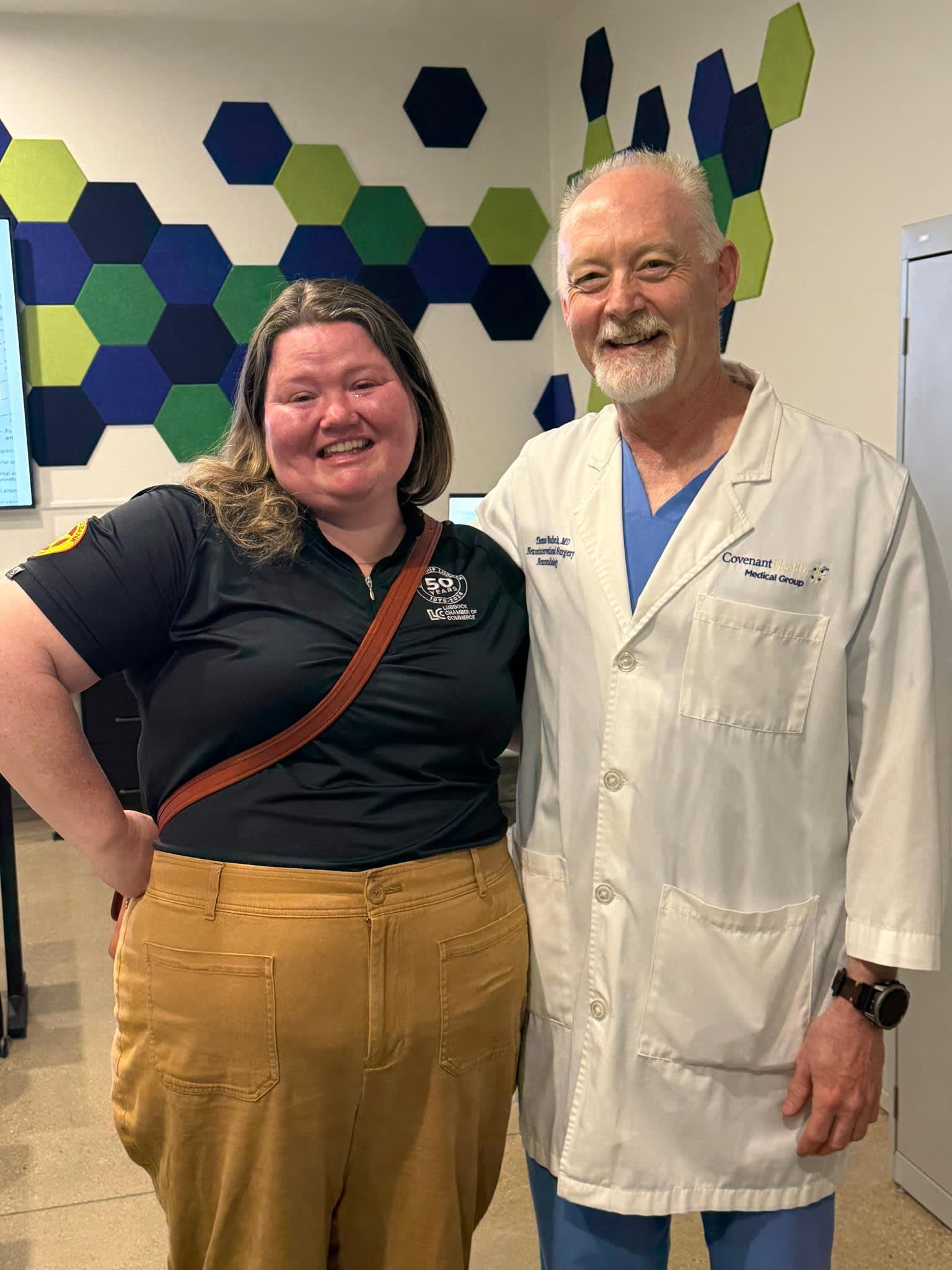
Overcome with emotion, she began to cry as she thanked him for saving her life.
Now, Meghan shares her story to raise awareness about stroke symptoms, especially among women.
“It's important for women to know that the symptoms of a stroke can look very different than they do in men,” she said. “You have to trust yourself when something doesn't feel right because you know your body better than anyone.”