 Seattle Children’s expertise and family-centered inpatient care at Providence St. Peter Hospital.
SOUTH PUGET SOUND – When a child needs hospital care, being able to stay in the community can make a difficult time a little easier. Providence St. Peter Hospital’s inpatient pediatric team brings together Seattle Children’s hospitalists and St. Peter pediatric nurses to care for children close to home whenever their needs can safely be met locally.
Q: What do you want referring providers to know?
Dr. Gilbert: We are here so children can receive hospital care in their own community whenever possible. If we can safely meet a child’s needs at St. Peter, keeping them close to home is better for the child and can make things easier for the whole family. Parents can stay nearby, remain connected to their support system and avoid the added burden of traveling for care.
Q: What would you want referring providers to know has changed?
Dr. Gilbert: We recognize that some families and referring clinicians may be used to looking outside our community for inpatient pediatric care. St. Peter’s inpatient pediatric unit remains open, with around-the-clock care from Seattle Children’s hospitalists and St. Peter pediatric nurses. We are strengthening local referral pathways and want clinicians to consider St. Peter when a child’s needs are within our scope of care.
Q: What ages and conditions can you care for locally?
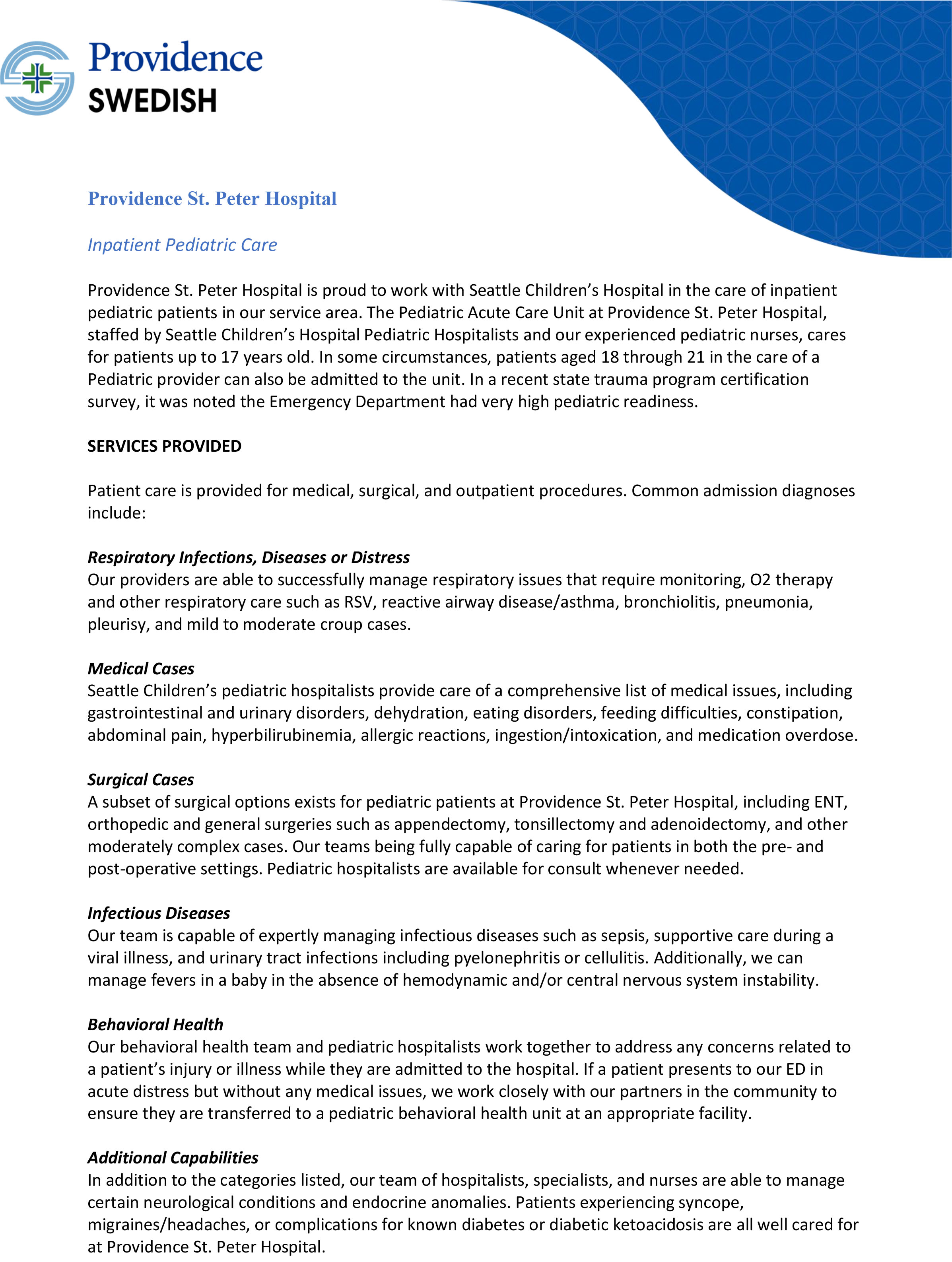
Dr. Gilbert: We care for babies, children and teens through age 17. That includes many common illnesses that require hospital treatment, such as asthma, bronchiolitis, pneumonia, dehydration and certain infections. A wheezing baby or a child having an asthma flare-up may be able to receive the care they need right here, depending on the severity of the illness and the support they need. Every admission is based on the individual child’s needs and whether we can safely provide the right level of care.
For a detailed overview of local capabilities and limitations, see St. Peter inpatient pediatric scope of services below. Referring clinicians should confirm current admission criteria with the hospitalist through STOC.
Q: How should clinicians make a referral or request an admission or transfer?
Dr. Gilbert: Call the Providence Swedish Staffing, Transfer and Operations Center, or STOC, available 24 hours a day, seven days a week. For planned or direct admissions from clinic or home, STOC coordinates the physician-to-physician conversation and instructions about arrival. For transfers, STOC coordinates the physician discussion and bed placement as needed. If emergency department evaluation is needed first, advance notice to the hospitalist helps us prepare for the child’s arrival and move them to inpatient care promptly when appropriate. Calling STOC is the starting point; the clinical discussion determines the appropriate next step.
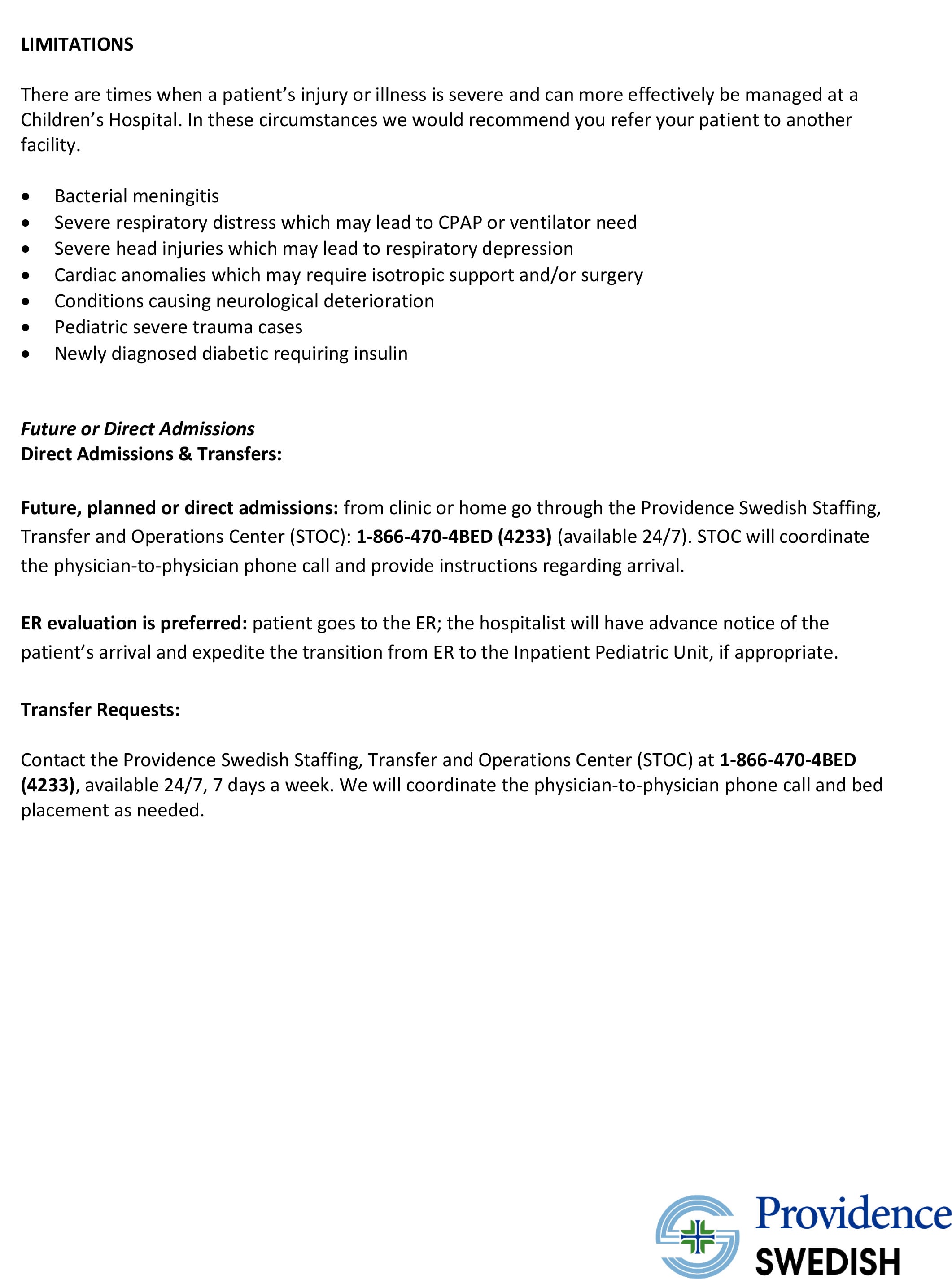
Future or Direct Admissions:
-
Future, planned or direct admissions:
-
-
Planned admissions from clinic or home go through the Providence Swedish Staffing, Transfer and Operations Center (STOC)
-
-
-
Contact Number: 1-866-470- 4BED(4233)
-
-
-
Available 24/7.
-
-
-
STOC will coordinate the physician-to-physician phone call and provide instructions on when and where to arrive.
-
-
ER evaluation is preferred: The patient goes to the ER and the Hospitalist has advance notice of the patient arriving and is able to expedite the patient going from the ER to the Inpatient Pediatric Unit, if that is an appropriate route.
Transfer Requests:
-
Requests for patient transfers go through the Providence Swedish Staffing, Transfer and Operations Center (STOC)
-
-
Contact Number: 1-866-470- 4BED(4233)
-
-
-
Available 24/7 and 7 days a week
-
-
-
We will coordinate the physician-to-physician phone call and coordinate bed placement
-
Q: How does the Seattle Children’s partnership support care?
Dr. Gilbert: Seattle Children’s hospitalists are here at St. Peter 24/7, working alongside Providence’s pediatric nurses. We follow Seattle Children’s protocols and can consult with its pediatric subspecialists and intensive care physicians when needed. That brings pediatric expertise into our community. When a child needs more specialized resources than we can provide locally, we help coordinate care at a children’s hospital. The goal is always the right care in the right setting.
Q: What can families expect during a hospital stay?
Dr. Gilbert: Our rooms are family-friendly, with room for one or two parents or guardians to sleep. We encourage parents to stay with their children. Families are part of the care team, and our nurses and doctors welcome questions and work with parents to understand their child’s needs. We want families to feel comfortable talking with us and to understand what is happening throughout the stay.
Q: How do you help children move from the emergency department to the pediatric unit?
Dr. Gilbert: Our pediatric hospitalists often consult on pediatric patients in the emergency department. We want to keep the time children spend in the emergency department to the minimum needed for safe evaluation and treatment. When a child needs admission, the emergency department and pediatric team work together to move them to the unit as quickly as possible. Advance communication from a referring clinician helps us prepare and coordinate that transition.
Q: Can children receive care at St. Peter after treatment at another hospital?
Dr. Gilbert: Yes, when their care needs are appropriate for our unit. We have cared for children with postoperative complications after surgery at a children’s hospital, allowing them to receive that care in their own community rather than travel back out of the area. These decisions are made case by case, based on the child’s condition and the care required.
Q: What additional support is available?
Dr. Gilbert: Interpreter services are available so families can communicate with the care team in their preferred language. We also have social workers and lactation support. Caring for a child means supporting the family, too, and those services can be an important part of a hospital stay.
Q: What do you hear from families about staying close to home?
Dr. Gilbert: Parents are thankful they do not have to travel when we can care for their child here. Having a child in the hospital is already a lot to manage. Being close to home and having space to stay together can make a meaningful difference. That is why we are here: to care for children and support their families in the community they call home.