

Based on research around an innovative workforce housing project in Clatsop County, Oregon, Providence CORE shares takeaways for future healthcare-led investments in affordable housing.
Back to CORE's website | CORE's blog stream
Both housing affordability and workforce shortages are major challenges for healthcare and social service organizations and the communities they serve. When workers can’t afford local housing, hospitals and other providers struggle to fill roles that deliver vital care and services.
In response, some healthcare organizations are investing in affordable housing solutions. The Hawk’s Eye Apartments project, in Clatsop County, Oregon, is one example.
As more healthcare organizations invest in workforce housing, research into Hawk's Eye by the Center for Outcomes Research & Education (CORE) offers lessons for future projects.
This blog post offers key takeaways from CORE's Hawk's Eye evaluation. For more on Hawk's Eye, visit Columbia Pacific CCO's website.
Housing affordability challenges in Clatsop County
Housing affordability is a major challenge in Clatsop County, a scenic coastal region in Oregon’s northwest corner. Limited buildable land and a high number of second and vacation homes have driven up housing prices and homelessness.
These high costs can have a direct impact on health care workers. Local employers report difficulties recruiting and retaining health care and social care workers. And there are an estimated 1000 vacant positions in these sectors across the region.
The Hawk’s Eye: An innovative investment
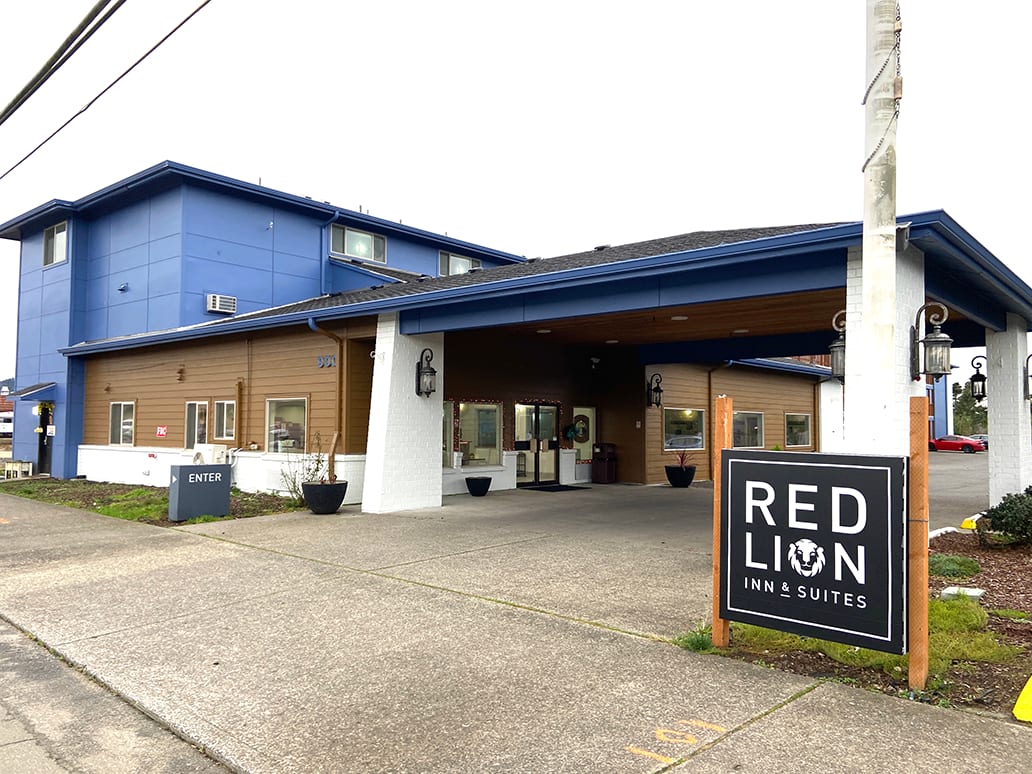
In response to these challenges, The Hawk’s Eye project transformed a former Red Lion Inn & Suites in Seaside, Oregon, into housing for workers and adults with disabilities. The apartments opened in 2024.
The project is funded by CareOregon and its subsidiary, Columbia Pacific Coordinated Care Organization (CPCCO), a non-profit Medicaid coordinated care organization serving 36,000 Oregon Health Plan members in the region. Partners include Clatsop Behavioral Health and property manager Quantum Residential.
“...it's incredible that (CPCCO) wanted to invest in a project like this. I think it'd be great if more insurance companies took on these types of projects.” – Project partner
CORE's evaluation: resident and partner experiences
Starting in 2023, CORE led a two-phase evaluation of Hawk's Eye focused on 1) early experiences and lessons learned during opening and 2) the experiences of residents and partners after opening.
Overall, the evaluation found that Hawk’s Eye helped address a critical housing gap. Residents and partners viewed the project as a meaningful contribution to local housing needs.
However, some residents had mixed experiences, and the evaluation identified important considerations for similar projects.
“For somebody to at least get their foot in the door and to have that one more piece of a rental reference under their belt... It's a stepping stone.”
– Employer partner
Five lessons for future workforce housing projects
Here are five key takeaways from CORE's research at Hawk's Eye:
- Expect the unexpected: Unanticipated difficulties and opportunities are inevitable. Continued flexibility and a willingness to adapt and persevere were essential to moving the project forward.
- Consider tenant needs: The size of Hawk’s Eye’s studio apartments was seen as a barrier for families, and could affect resident retention. Future projects should carefully consider intended tenants’ specific needs.
- Engage staff with expertise: From planning through opening, the project benefited greatly from staff with deep housing expertise who could navigate challenges and keep the work moving forward. At the same time, project leaders called out opportunities to include more local team members.
- Build deep partnerships: Values-aligned partnerships were critical to the project’s success. Trust among partners created space for shared learning and collaboration around common goals. A broad coalition of partners, including law enforcement and shelter providers, is helpful!
- Continued advocacy can help: Housing affordability will remain an issue for the foreseeable future. This project shows that health care systems and plans can be important advocates for expanding affordable housing options through new strategies, like Hawk’s Eye.
Going forward
The Hawk’s Eye project shows these investments' potential role in addressing workforce shortages. It also highlights the need for flexibility, strong partnerships, local expertise, and thoughtful planning around resident needs.
Going forward, research like CORE's can help guide those future efforts.
Related news & resources


