

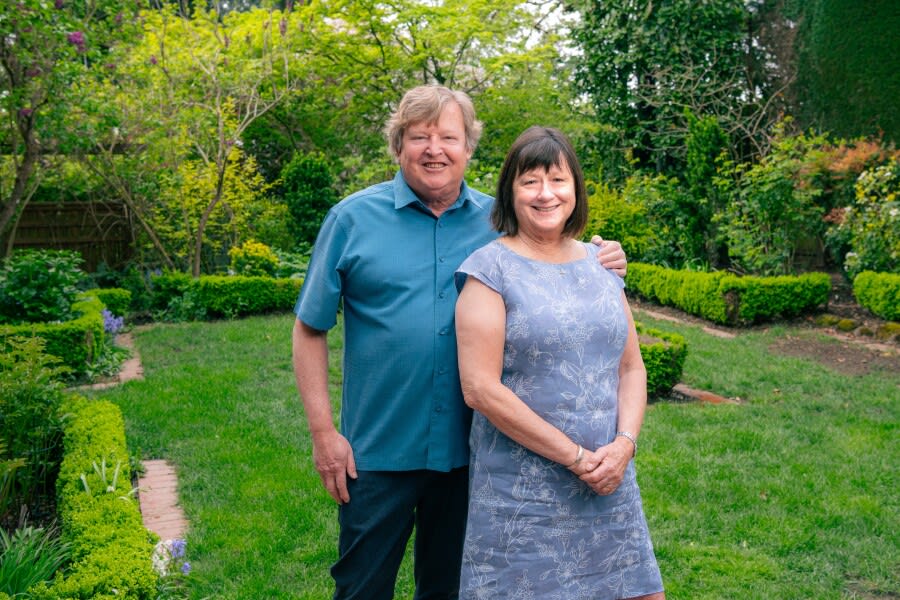
Brad Pease was only one week from his well-deserved retirement in September 2022 when a routine physical by his family doctor, Angela Stearns, M.D., revealed a lump in his neck. After multiple tests and a biopsy, he traveled to Israel where he regularly gives archaeological tours focusing on the Second Temple period. Three weeks into his monthlong trip, Brad’s wife, Heather, called at 3:30 a.m. with test results and a diagnosis: medullary thyroid cancer.
From a calm sea to weathering a storm
As a man of faith, Brad described a defining moment that followed: “I retrieved my stand-up paddle board, and I headed out into the middle of the Sea of Galilee to just pray and reflect on what all this meant – or could mean.”
Heather was determined to find Brad the absolute best surgeon available. She identified Kelvin C. Yu, M.D., a Providence-affiliated oncology surgeon who specializes in neck cancers.
Brad met with various doctors prior to his scheduled surgery, including Patricia A. Burford, M.D., a Providence endocrinologist. An endocrinologist treats diseases related to hormones and the glands that produce them, including the thyroid.
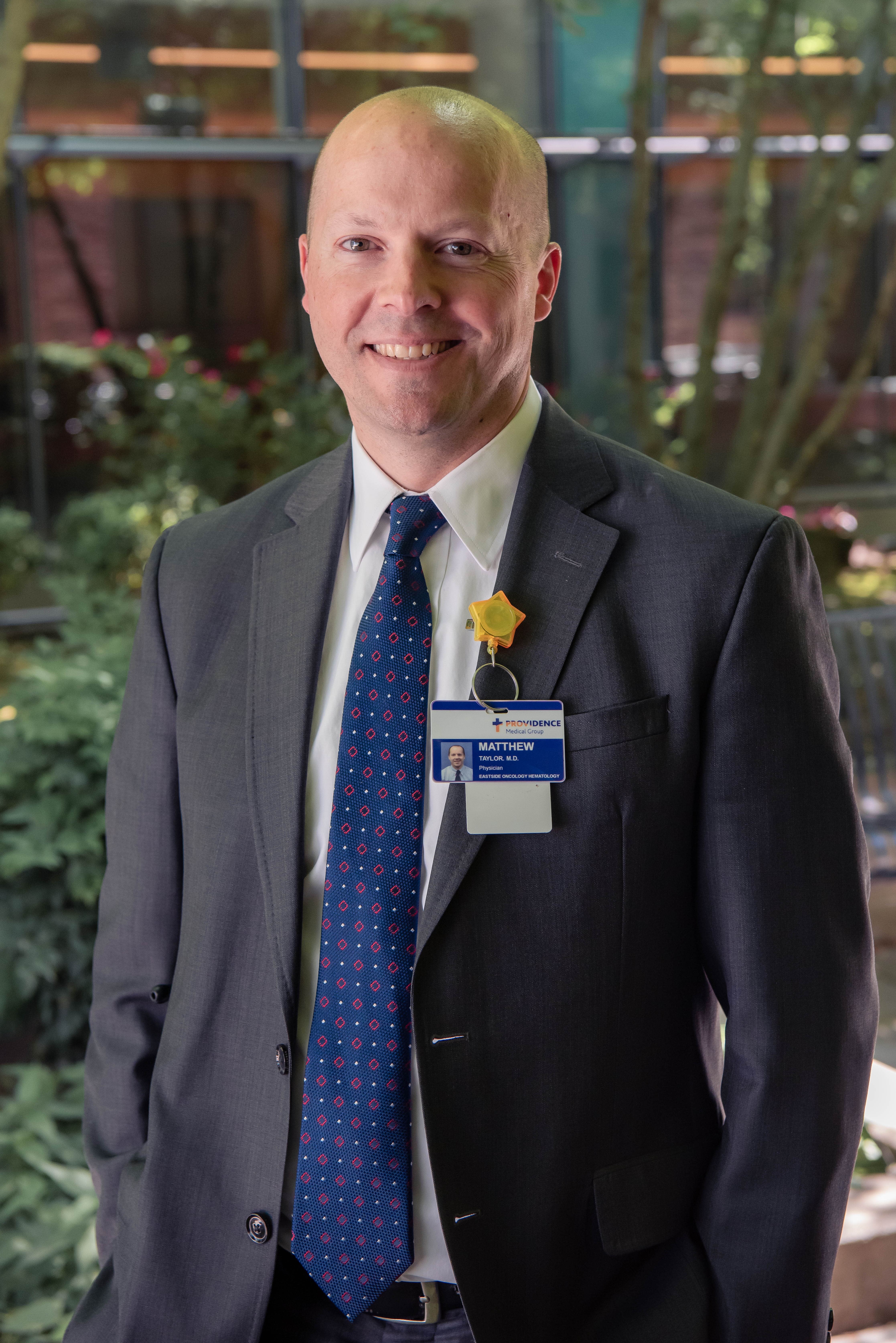
Brad was also introduced to Matthew Taylor, M.D., a Providence Cancer Institute physician-researcher and Dr. Burford’s colleague. Dr. Taylor said, “If the surgery doesn't go as well as hoped, I specialize in thyroid cancers, and we'll be getting together.”
Brad’s procedure was scheduled for Dec. 23. He was staying at the donor-supported Providence Guest House across the street from Providence Portland Medical Center. One of the worst winter ice storms to hit Portland in years had arrived the night before and Brad wasn’t sure the surgery would even happen. But the intrepid and dedicated Providence caregivers all arrived as planned. Brad received the operation.
Unfortunately, the cancer had spread beyond the thyroid, requiring an extensive 8 ½-hour surgery.
Just three weeks later, Brad walked into a follow-up appointment and found three doctors in attendance. “They said the tumor had roared back - and that was probably the lowest moment of the whole experience,” said Brad.
Never a better time than right now
Dr. Taylor had ordered mutation testing on Brad’s tumor. He made a memorable yet unusual declaration: “There’s never been a better day than today to be diagnosed with medullary thyroid cancer.”
Dr. Taylor revealed that a relevant clinical trial had become available only the week before. The new phase I/II study was testing a drug called EP0031 for use on conditions like medullary thyroid cancer. EP0031 is a selective RET inhibitor (SRI) that aims to address an unmet need in patients with RET-altered tumors, whose cancer has progressed on first generation SRIs.
At the time, just four U.S. hospitals were holding the trial to test the new drug – and Providence Cancer Institute was one of these sites.
He told Brad, “I think you'd qualify to participate in the study.”
Donor investment in robust clinical trial infrastructure, paired with Dr. Taylor’s leadership in thyroid cancer research, meant that Providence Cancer Institute was ready to move quickly when the trial became available. Brad did not have to leave Portland to access a treatment that could change the course of his disease.
Right care at the right time
For Brad, this was a “big M” moment – a true miracle. He reflected on the proximity of Providence Cancer Institute, the drug being studied, the timing of the clinical trial and the convergence of care when he needed it most.
Brad described spending hours in the infusion center every two weeks during the first year of the clinical trial, which is ongoing. “The people in that infusion center are absolutely amazing,” he said. Behind each appointment was a network of caregivers, researchers and donors whose support made his treatment possible.
Over time, his visits decreased to quarterly appointments. Brad’s calcitonin levels, a marker associated with his cancer, dropped sharply. Imaging showed the tumor shrinking so dramatically that it’s nearly undetectable.
“Before the surgery, my calcitonin count was 36,000, and right now it’s in the teens. That’s really, really good!” said Brad.
It's the kind of outcome everyone hopes for: measurable progress paired with more moments that matter.
When sitting among other patients with cancer who are quite ill or are undergoing more visible treatments, Brad acknowledged that it sometimes doesn’t seem much like a fight. “Every morning, I put a pill on my tongue. I drink some water. That’s my cancer fight. But I’ll take it!“
A deep trust in his care team, no matter what
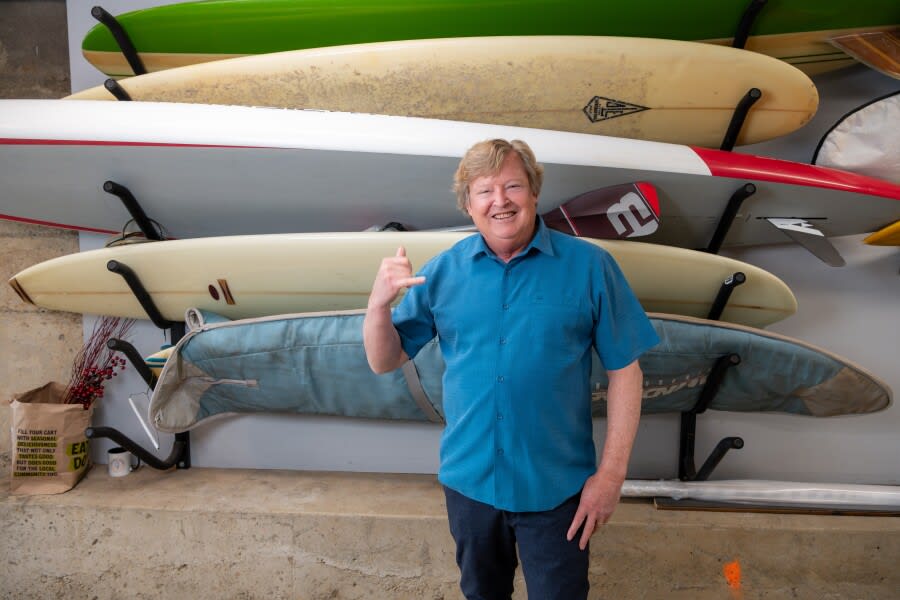
Brad emphasized the humanity and compassion of Providence Cancer Institute’s care environment, as well as the vital role of donor generosity in bringing leading-edge research to patients like him. “These supporters are not only making a difference for patients right now, but they’re paving the way for new treatments and therapies that will help thousands more in the future,” he said.
Brad knows that this is a study drug and the outcome is always uncertain. “I have so much trust in Dr. Taylor,” stated Brad. “If this thing does go backwards, I know I’m in the best hands.”
Related news
It started with one bandage, and a patient’s smile
A quiet lifeline: Meet the volunteer at Jill Lematta Learning Center


