

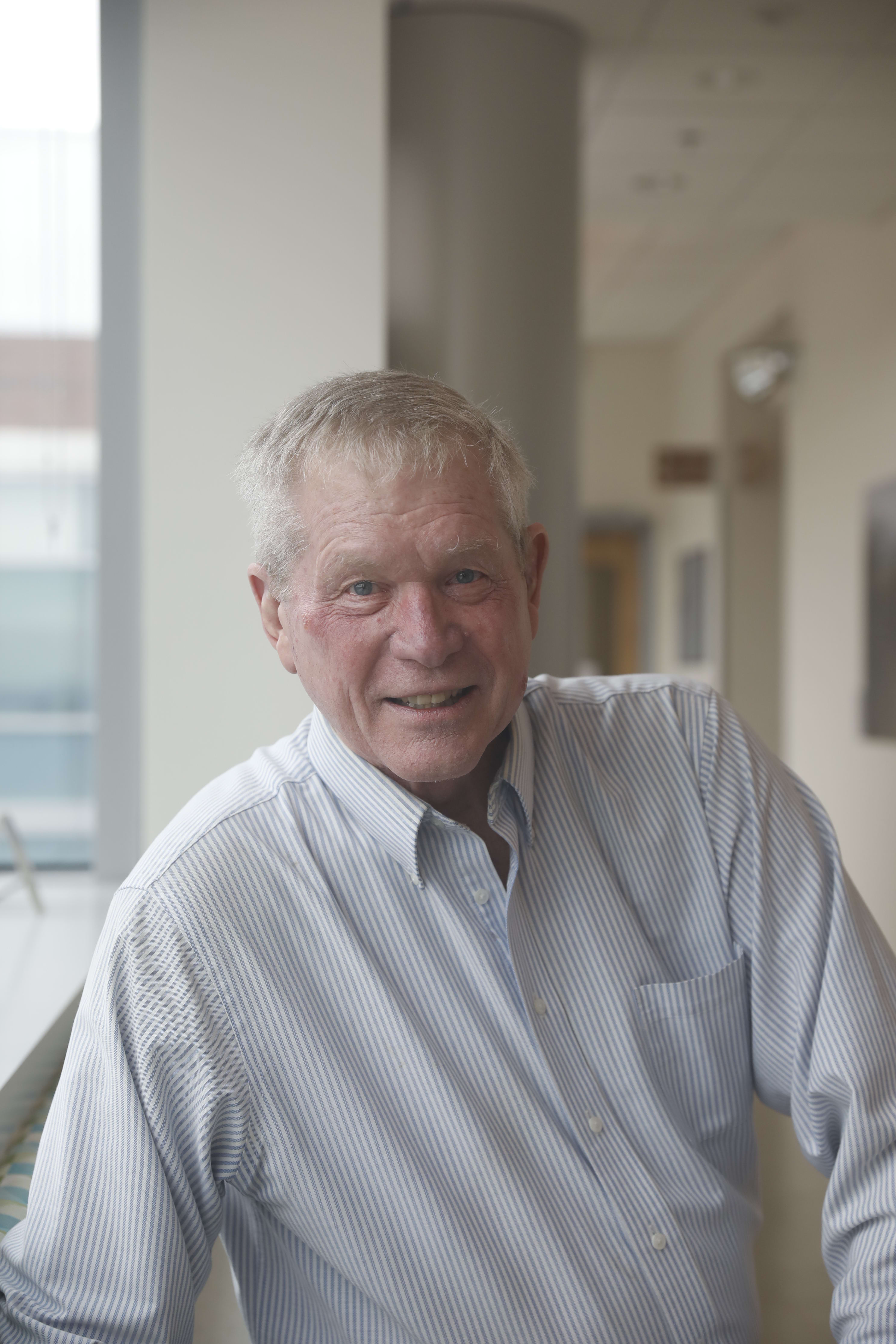
 When facing difficult times, Del Abbott, 74, draws on the well of strength and resilience he cultivated years ago, first as a kid growing up in Springfield, Ore., then as a young Air Force security policeman guarding missile fields in the middle of a brutal North Dakota winter.
It takes that kind of grit to survive cancer once. Del has done it twice with help from the experts at Providence Cancer Institute.
Resilience and giving to others
After graduating from Springfield High School, Del headed to Central Oregon to work for his uncle in heavy construction. When the economy tanked, he moved back home. Then came 1972, the last year of the Vietnam War draft lottery. Del’s number was 105; the Army was drafting up to 108.
Del joined the Air Force, training as a security policeman before he was stationed in North Dakota and then Alaska, where he learned Arctic survival techniques. Building shelters in 35-degrees-below cold, packing a survival bag and eating things like porcupine and pine bark taught skills that would serve him in the future more than he could know.
After returning to Oregon and attending Central Oregon Community College in Bend, Del spent nearly three decades in law enforcement with the county sheriff’s office. The same steady temperament and skills that carried him through his years in the Air Force served him well in his career.
After he retired, Del returned to the area where he was raised to convert an old barn near the McKenzie River into a home. Caring for his property was hard work, but the kind he loved. He thought he had finally reached a place where he could just enjoy his favorite pastimes while still giving back to others. Del had refereed youth sports for years and volunteered with juvenile justice programs; retirement gave him more time to give back to kids in his community.
Then came the cancer diagnosis.
A difficult treatment during a pandemic
The scratchy throat and persistent need to clear it didn’t concern Del in early 2020, when COVID-19 was around. When he ultimately was able to get an appointment at the Veteran’s Administration hospital in Vancouver, Wash., he found there was more to it. Del had throat cancer.
In July 2020, Del started seven weeks of grueling radiation and chemotherapy at the VA. He was living in Bend at the time, so he stayed in VA housing near the clinic. Because of the pandemic, his brother wasn’t allowed to bunk up and help him through the side effects. Del relied on his internal strength and intuition to get through the long weeks.
The treatment cost him his sense of taste and ability to swallow easily, side effects he still lives with today. But he got through it, even returning to youth sports as a referee when he could.
When troubling bloodwork came back a second time, Del had scans done. That’s when a lump was found in his lungs. This time, his VA doctors pointed him toward a different kind of care, a clinical trial at Providence Cancer Institute. It was a treatment that would change the course of his recovery.
Clinical trial offers a path forward
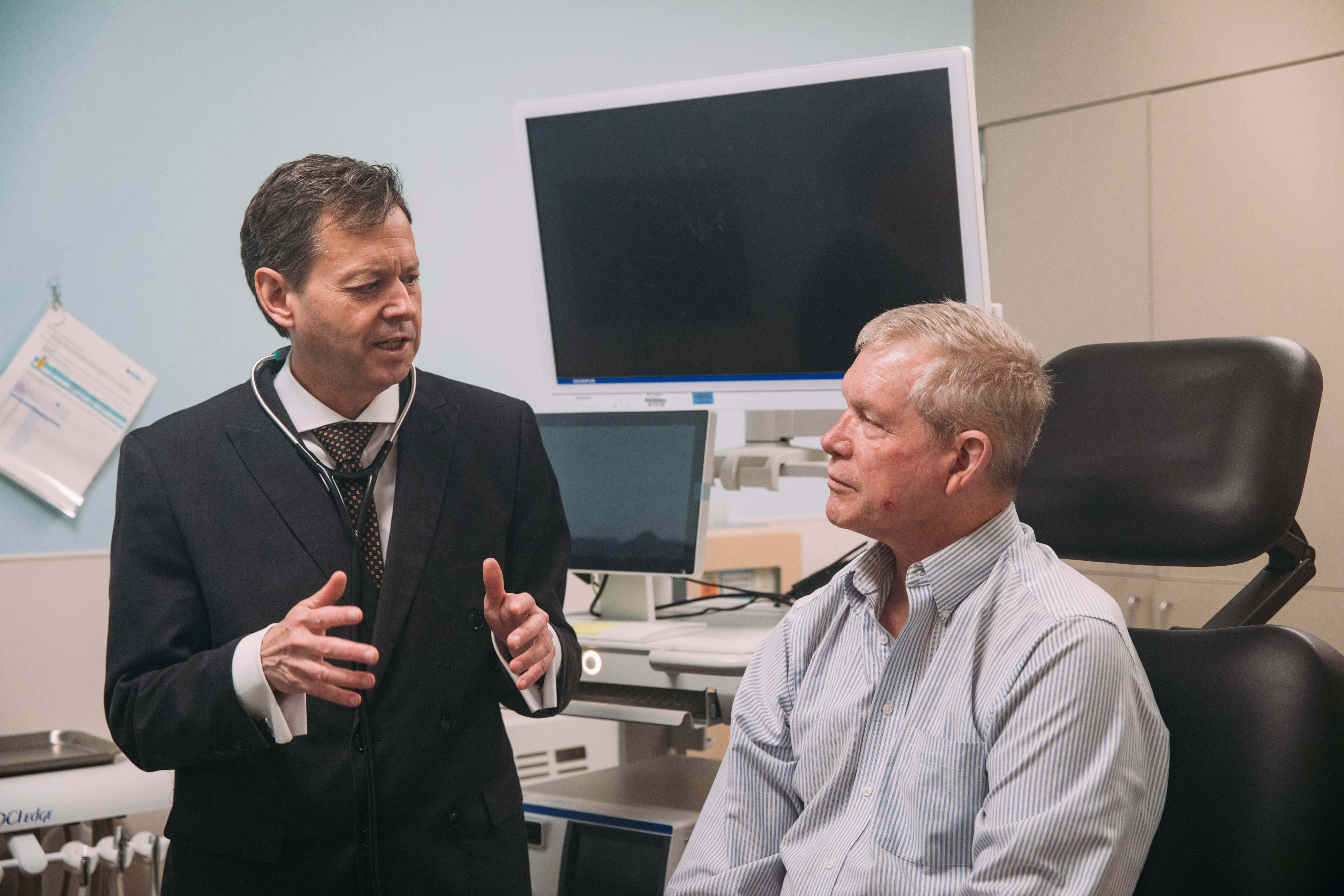 Del was introduced to Rom Leidner, M.D., a medical oncologist and researcher at Providence Cancer Institute. Dr. Leidner was the principal investigator on a new clinical trial evaluating a cancer vaccine.
Before Del could join the trial, the clinical research team needed to check one thing: a blood test that would tell them whether his immune system was strong enough for the treatment to work. Anything below 20 and the odds dropped. In the low teens, it might not work at all. Del's count came back at 40.
"I'm looking good here," Del remembers thinking.
On a whiteboard in his office, Dr. Leidner sketched white blood cells with little arms and hooks reaching for the cancer. He explained to Del that the treatment was designed to give his immune system an extra "hook" into the tumor, so it could recognize and attack what it had been missing all along.
“I am admittedly excited about the advanced research we are conducting. I want to share that enthusiasm and hope with patients,” Dr. Leidner said. “The whiteboard is the best way to do that. The science behind the research can be daunting but nothing is better than seeing you've helped someone connect the scientific concepts that underlie a study to the string of clinic visits, blood tests, scans and biopsies that make up the day-to-day experience of being a patient in a pioneering clinical trial.”
A first-of-its-kind approach
Developed and sponsored by Providence Cancer Institute, the clinical trial opened for people with head and neck cancer that is resistant to the initial treatment. It was an early phase study and the first of its kind to evaluate a vaccine that contains previously unstudied groups of “dark matter” proteins.
Nearly all proteins vital for human life are created by about 1.5% of our DNA. The rest has been called "junk DNA" or the "dark genome." Scientists previously thought the dark genome had little function, but new research indicates they were wrong. Researchers at Providence Cancer Institute are at the forefront of uncovering dark genome applications to cancer therapy. Bernard A. Fox, Ph.D., interim scientific director at Earle A. Chiles Research Institute, a division of Providence Cancer Institute, leads the research.
Scientists have learned that dark matter proteins can be associated with cancer. Some may even help cancer evade immune detection and drive disease.
But the presence of dark matter proteins and their byproducts also offer hope: They represent countless new biologic targets (“hooks”) on cancer cells that researchers can target with new immunotherapies. These new treatment strategies using dark matter proteins may be able to prime the immune system to fight cancer, like the vaccine-based approach Del was helping pioneer.
Del’s clinical trial regimen started with a biopsy, then weekly vaccine treatments, including one Dr. Leidner nicknamed "GITR done." For Del, it got to work fast. After three weeks, a follow-up biopsy suggested the tumor was already responding. By five weeks, this was confirmed on a CT scan of Del's lungs.
"There's nothing left to biopsy," Del remembers being told. "It's just gone."
That was in 2022. Del has been cancer-free since.
“This is the reason we do research,” said Dr. Leidner. “The novel insight that "junk DNA" isn't junk at all, led to a paradigm shift in cancer vaccine development. This represents the first dark matter therapy given to patients anywhere in the world . . . and it appears to have worked. Scientists are skeptical by nature. Shrinking tumors on CT scans are the hard facts that will be required to continue advancing dark genome research.”
Giving back by participating
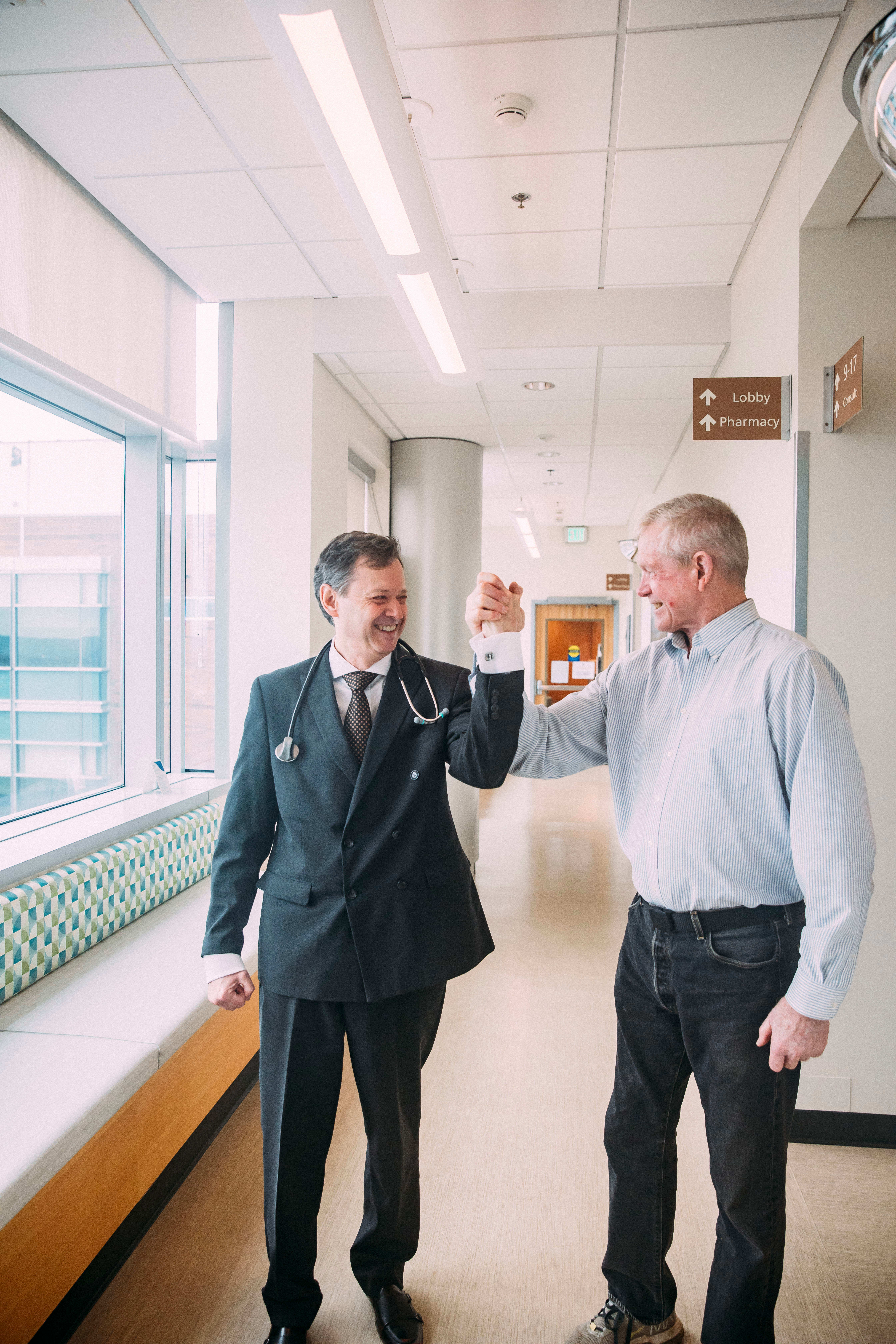 Looking back, what stands out most to Del isn't just that the treatment worked, it's how little it took from him while it did. He never missed a referee assignment. He kept working on his house, at one point logging 13 hours of hard labor in a single stretch. Aside from a rash on his arm that eventually healed, he says he never felt sick.
"I was eating. I was exercising. I was doing what everybody does," he said.
He credits much of that to his care team at Providence Cancer Institute. "They took care of me," he said. Del shared photos of his home renovation with them during appointments, and they shared their stories with him. “They saw me as a person, not a case.”
For Del, being part of the trial wasn't just personal, it echoed the sense of service that carried through his years in the Air Force and in law enforcement, as well as the hours devoted to refereeing youth sports. Contributing to research that could help other patients felt like another way of showing up for a community.
“It was an honor,” Del said. “And for it to be successful... that gave Dr. Leidner and the research team more tools to help others. If I can help one person not get cancer, I’d be so tickled.”
Find out more
Providence Cancer Institute is one of the leading providers of cancer care in Oregon and a global leader in immuno-oncology. Through its research division, the Earle A. Chiles Research Institute, patients have access to a vast clinical trial portfolio. Philanthropy is critical to helping us advance cancer research and make clinical trials, like the one Del participated in, available to patients throughout the region. Find out how you can help.
Related news
A new liver cancer trial explores a “two-in-one" treatment approach
Providence Cancer Institute secures three significant grants


