

A new clinical trial for people with hepatocellular carcinoma (HCC) is evaluating an investigational bispecific antibody called pumitamig.
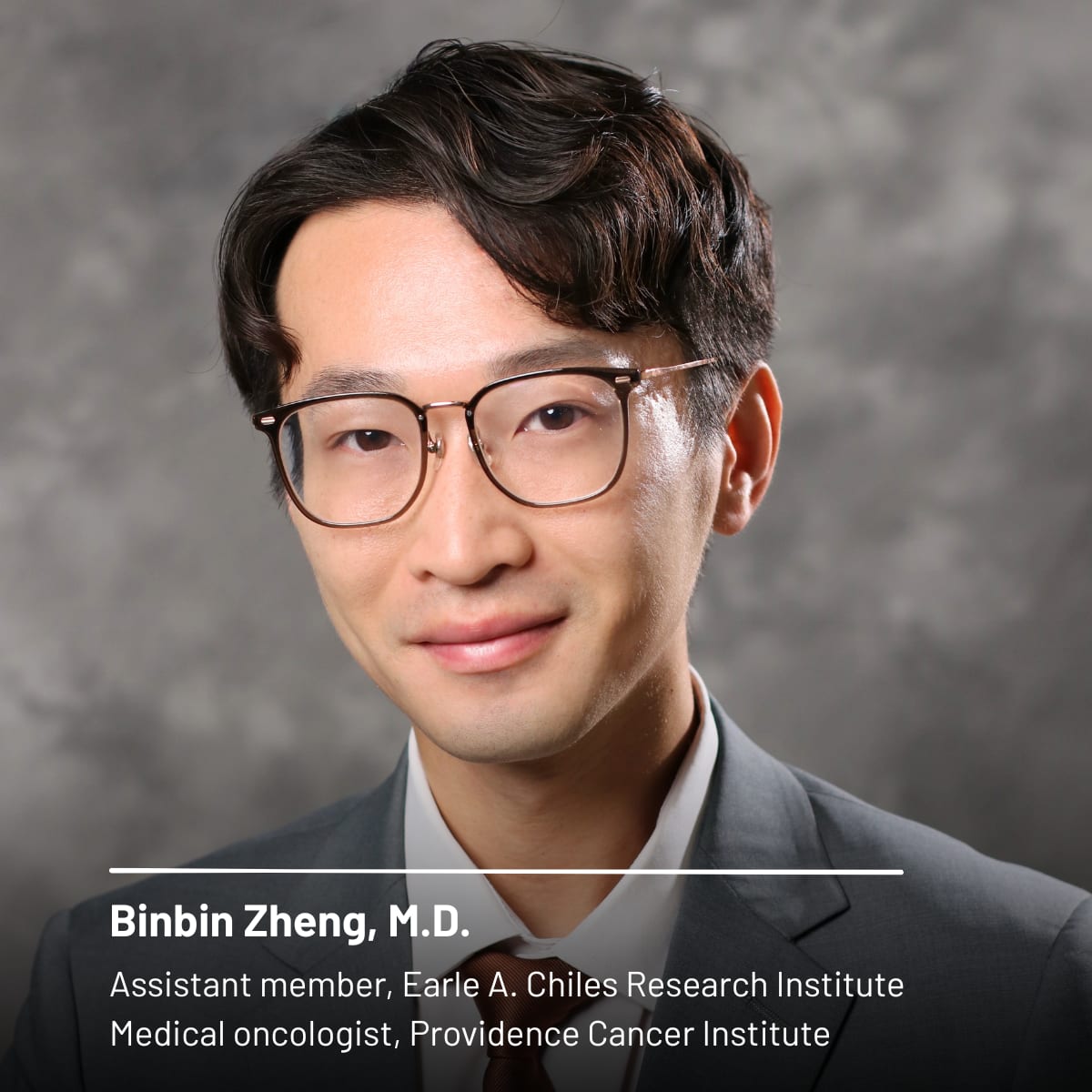
Providence Cancer Institute is currently enrolling patients at Providence Cancer Institute Franz Clinic and Providence Cancer Institute Westside. Binbin Zheng, M.D., is the principal investigator.
 HCC is the most common type of liver cancer. It is also one of the most serious types of cancer because it may not cause symptoms right away, which means it can grow undetected until it has advanced.
For HCC that has moved to other organs or cannot be removed by surgery (unresectable), one current treatment combines two medications: atezolizumab and bevacizumab.
The medication in this study, pumitamig, combines the actions of both atezolizumab and bevacizumab.
Why this study is important
Although current standard-of-care regimens such as atezolizumab plus bevacizumab have shown meaningful improvements in clinical outcomes, many patients experience disease progression within the first year of treatment. For this reason, there is a continued need for new therapies that can further improve outcomes, prevent resistance and address the unique challenges of HCC.
How pumitamig works
Atezolizumab and bevacizumab work separately: one helps the immune system recognize and attack cancer cells, and the other blocks the growth of new blood vessels that tumors need to survive and grow.
Pumitamig is designed to do both at once, attaching at these two different targets within and around the tumor cells at the same time. By combining both actions within the same drug molecule, pumitamig may potentially boost our immune system even more to fight the cancer cells.
This study will look at pumitamig either by itself or in combination with ipilimumab, a medication that helps the immune system find and fight cancer. Ipilimumab is a standard treatment for some types of cancer.
Pumitamig is currently being evaluated in several clinical studies, both alone and in combination with other medications. Early findings offer hope: it has been well-tolerated, with manageable side effects, and may be effective in treating advanced cancers, including non-small cell lung cancer, small cell lung cancer and other solid tumors.
Study design
This study includes two phases. The purpose of phase I is to determine which dose combination of pumitamig and ipilimumab will have a better balance of safety and efficacy. Once the dose or doses are selected in phase I, phase II will begin.
The purpose of phase II is to assess whether the dose or doses of pumitamig, either alone or in combination with ipilimumab, help people live longer and keep their cancer from getting worse for a longer time.
Find out more about this study
Providence Cancer Institute is currently enrolling patients in this study.
To refer a patient:
Call 503-215-1979
Find out about other clinical trials at Providence Cancer Institute.
Related news
Providence Cancer Institute secures three significant grants


