

June 2026
Traditional chest surgery often required large incisions and extended recovery. Today, robotic-assisted surgery allows for a dramatically less invasive approach.
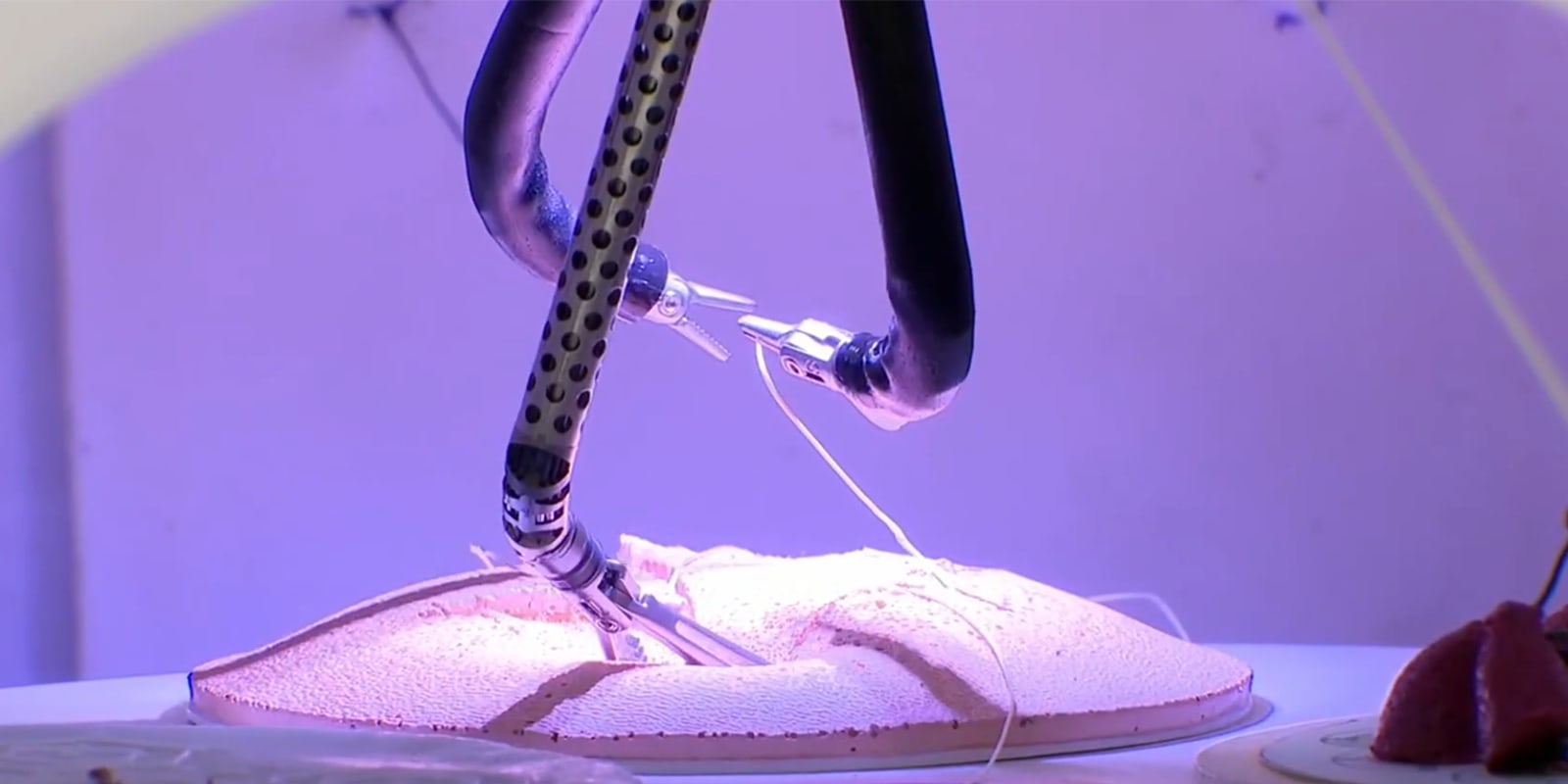
Areo Saffarzadeh, M.D., director of robotic thoracic surgery, introduces the newest innovation in surgical care: The da Vinci 5 robotic system — designed to enhance a surgeon’s precision while minimizing impact on the patient.
Smaller incisions, quicker healing
The da Vinci 5 robotic system uses specialized instruments and advanced tools — like robotic staplers— to enhance safety during procedures.
“So in the past, to do surgery in the chest, we had to make a big incision between the ribs. And now we can just do surgery with really small holes," Dr. Saffarzadeh says.
“This stapler puts three rows of staples on each side, and then it cuts in the middle. And so you can see there's not a single drop of blood.”
These innovations reduce the need for more complex manual techniques, lowering risk and improving patient outcomes.
A more connected surgical experience
Beyond the technology itself, robotic surgery is creating new opportunities for collaboration and support.
“The best part about this robot is that for the first time it allows the surgeon to actually feel while they're doing surgery instead," Dr. Saffarzadeh says.
“The second best part of this is there's something called telepresence where If I'm in trouble in an operation, I can call my mentor … He can log into his computer from across the world and see what I'm doing during surgery and give me tips or feedback.”
This ability to consult with experts in real time means patients can benefit from specialized insight — no matter where they are.
Faster recovery, better patient experience
At its core, robotic thoracic surgery is about improving the patient journey from procedure to recovery.
Patients who once faced week-long hospital stays can now often return home within days.
“And instead of spending a week in the hospital for chest surgery, they're out of the hospital in one to two days," Dr. Saffarzadeh says.
This means less disruption and a quicker return to what matters most: Your daily life.

Watch Dr. Saffarzadeh's video on Instagram


