

Pulsed field ablation is shown to be safer and more efficient than other techniques.
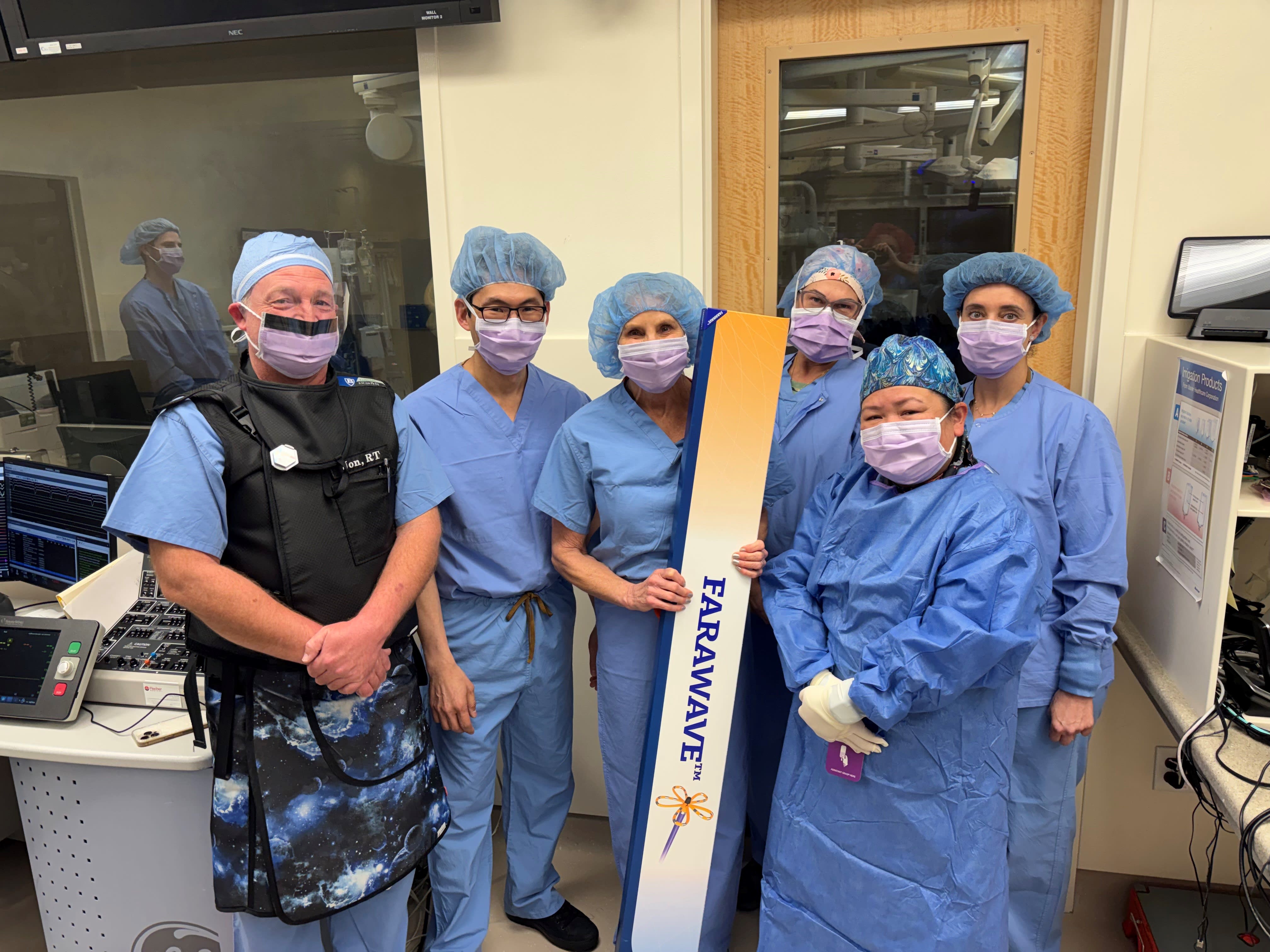
Providence Queen of the Valley Medical Center reached an exciting milestone in cardiac care last month, successfully performing its first pulsed field ablation procedure. This groundbreaking technology is transforming the treatment of atrial fibrillation (A‑fib), an irregular heartbeat that can increase the risk of stroke and heart failure if left untreated.
Pulsed field ablation uses short, targeted bursts of electrical energy to modify heart tissue that causes A‑fib. Unlike traditional therapies that rely on heat (thermal ablation) or cold (cryoablation), this new approach significantly reduces the risk of damage to surrounding organs and shortens procedure time—making it a preferred option for many patients.
A Revolutionary Approach to Treating A‑fib

“It’s a game changer. Pulsed field ablation targets the selected tissue with less risk of damage to surrounding organs, making it very fast and incredibly safe. It’s been a sea change, allowing us to restore normal heart rhythm to patients in their 80s or even 90s,” said Dr. Judith Eisenberg, an electrophysiologist on Providence Queen of the Valley’s medical staff.
The procedure takes approximately 90 minutes and has been shown to be both safer and more efficient than other ablation techniques. As a result, patients can often receive treatment, recover, and return to their daily routines sooner.
“In the past, some patients have been hesitant to undergo a procedure because of the recovery time. With pulsed field ablation, there is minimal inflammation as the heart heals from the procedure, making it an easier experience for our patients. It’s an exciting step forward for Queen of the Valley patients who can now have the procedure right here in Napa,” explained Dr. Richard Hongo, an electrophysiologist on the Queen’s medical staff.
Early Detection is Key
A‑fib is common and is a leading cause of stroke and heart failure, affecting roughly 10% of adults over age 65. Studies show that treating A‑fib early—ideally within the first year of diagnosis—dramatically reduces long‑term risks.
“It’s an important diagnosis to make,” said Dr. Eisenberg. “The sooner we detect A‑fib, the more success we have treating it.”
Patients experiencing symptoms such as palpitations, dizziness, or shortness of breath should talk to their primary care provider about screening for A‑fib.
Celebrating a Milestone in Heart Care
Congratulations to the entire cardiology team whose dedication and collaboration helped bring this advanced technology to our community!
About the Author
More Content by Providence News Team


