

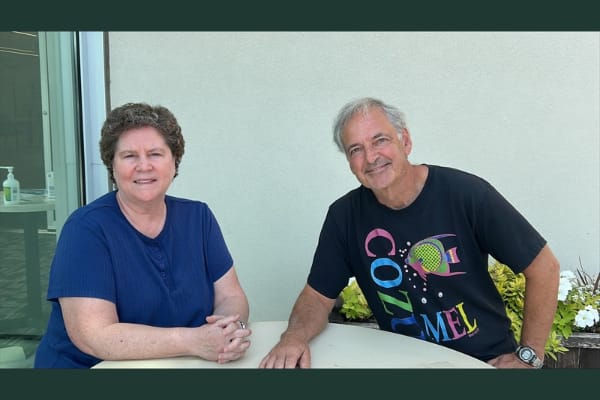
Above, Annette and Scott Lewis. Below, Steven Adams.
Scott Lewis doesn’t remember much about his stroke in 2012. Those traumatic memories belong to his wife who quickly recognized the signs and rushed him to the Kadlec Regional Medical Center Emergency Department.
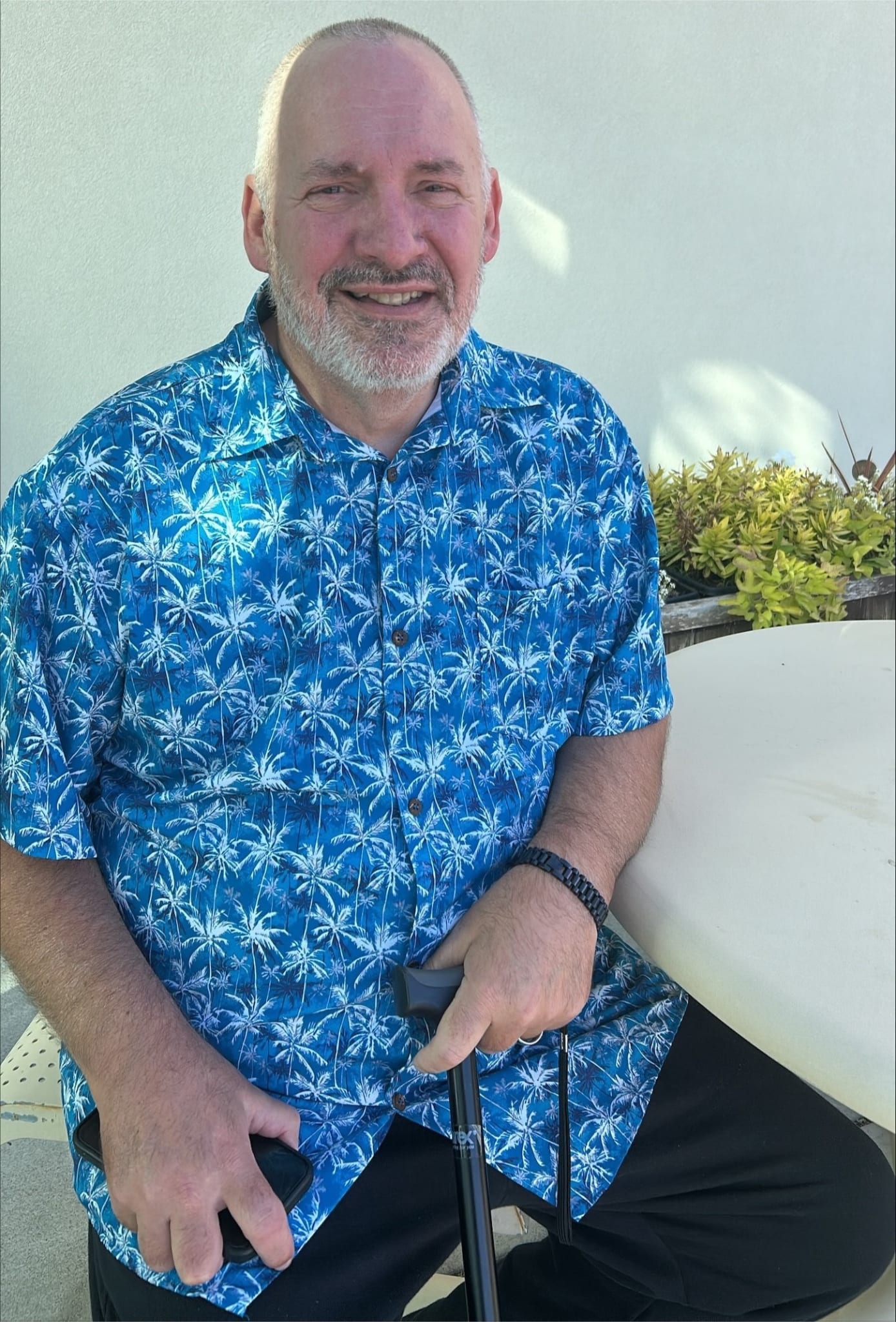 Steven Adams’ experience was very different. He was just having trouble coming up with words, and his wife insisted they go to Kadlec. He was stunned when the diagnosis was stroke. More symptoms came in waves in the weeks that followed.
The two men, both of whom are in the Kadlec Stroke Support Group, have faced many challenges, and their paths have touched nearly every aspect of care available in our community for a person who has experienced stroke.
Stroke varies widely in every individual, depending on the area of the brain affected and other factors. The classic symptoms are defined by the American Stroke Association using the acronym B.E.F.A.S.T. – balance loss, eye (vision) changes, face drooping, arm weakness, speech difficulties and the importance of time in getting the person to medical care.
But not everyone has every symptom, and the symptoms can be pronounced, like they were with Scott, or more subtle, like with Steven. Recovery can be difficult and present many challenges.
Scott Lewis
On an October morning in 2012, Scott was eating breakfast when he suddenly dropped his fork and sat staring at his hand. It felt numb. When he tried to speak, his words came out garbled. His wife, Annette, recognized the signs of stroke and rushed him to Kadlec.
Scott had suffered a massive stroke affecting the left side of his brain, and in the early months there were only a few words he could say clearly – the names of his wife and children.
He was told he had aphasia, a disorder affecting multiple aspects of communication.
“I didn’t even know what that was,” he said.
He was only 50 and was an industrial engineer and a violinist. He and Annette had three kids at home.
He was never able to return to work. Instead, his work became recovery. He became one of the early members of the Kadlec Stroke Support Group.
“After a few months, with therapy and working really hard, he was able to start talking more, though a lot of times he said a lot of words that didn’t make sense,” Annette said. “He was determined to read and write again also so he worked really hard on that. He was also determined to play his violin.”
Scott had both inpatient and later outpatient therapy at Kadlec.
“They were great for both the inpatient and the outpatient,” Annette said. “Speech was the most challenging for him and frustrating.”
Physically he made great strides and was able to return to playing his violin. He continues to perform and loves seeing the joy it brings to other people.
The speech came slower. He eventually could carry on a conversation with someone if he was directing the conversation but got lost if they started asking him questions.
Still, he improved. Then in 2023, the couple was on a family trip to the Washington coast, hundreds of miles from home, and Annette saw a sudden, terrifyingly familiar symptom – Scott abruptly sat down on the edge of the bed and stared at his hand.
The second stroke was not as severe as the first, but some of his progress was lost.
“It sucks,” he said.
The Kadlec Stroke Support Group has been a constant for him throughout his recovery, and he tries to never miss a meeting.
“I love doing that,” he said.
Steven Adams
Steven Adams, 60, had a stroke on Oct. 2, 2025.
“It was a normal day,” he said. “As time went on, I was finding it difficult to come up with words and speak. My wife said, ‘We are going to the ER.’”
The Kadlec Emergency Department was packed that day, but Steven estimates their wait was 2 minutes or less.
“They took it very seriously,” he said. “I had no idea I was having a stroke.”
After the initial diagnosis, he was in freefall. He had a job he relied on that he could no longer perform, a mortgage to pay, mounting medical bills and follow-appointments ranging from primary care to specialists to therapists. The couple needed help.
Kadlec offers financial assistance to eligible patients who do not have the financial ability to pay and was able to help Steven with the medical bills. The assistance removed one obstacle. He and his wife, Carla, had many more to navigate, including state and federal programs with extensive application processes and waiting periods.
“We are regular people, and now there is all of this to figure out,” Carla said.
“I felt lost,” Steven said. “In a way, a person who has had a stroke is very alone.”
Two or three months after the initial diagnosis, half of his face became numb, and a few weeks after that, he lost his sense of taste and began having gastrointestinal problems. The symptoms were part of a cascade of physical changes.
“The surprises afterwards, that’s the hard part,” Carla said. “We kept thinking ‘Can we just find out what is normal first, so we don’t stress about it? Isn’t there some kind of list of things you could experience?’”
Over time, occupational, speech and physical therapy at Kadlec helped Steven recover his speech and address his physical challenges. He began feeling a little more confident in navigating his new reality.
“I’ve had a lot of success with Kadlec” he said.
Through his physical therapist, he also learned about the Kadlec Stroke Support Group. Steven had been desperately searching for information and community online, and in the process found some help, but also some predators.
“I joined a Facebook stroke support group. I joined to get answers, but some of what I got were scams,” he said.
He now goes to the once-a-month Kadlec Stroke Support Group, and wishes the group met even more often. In it, he has found information, and the understanding of other people who have experienced strokes.
“People give up. We almost gave up,” Steven said. “It didn’t take me long to see how valuable the Kadlec Stoke Support Group was. No one else understands what you are going through.”
About the Author
More Content by Providence News Team


