

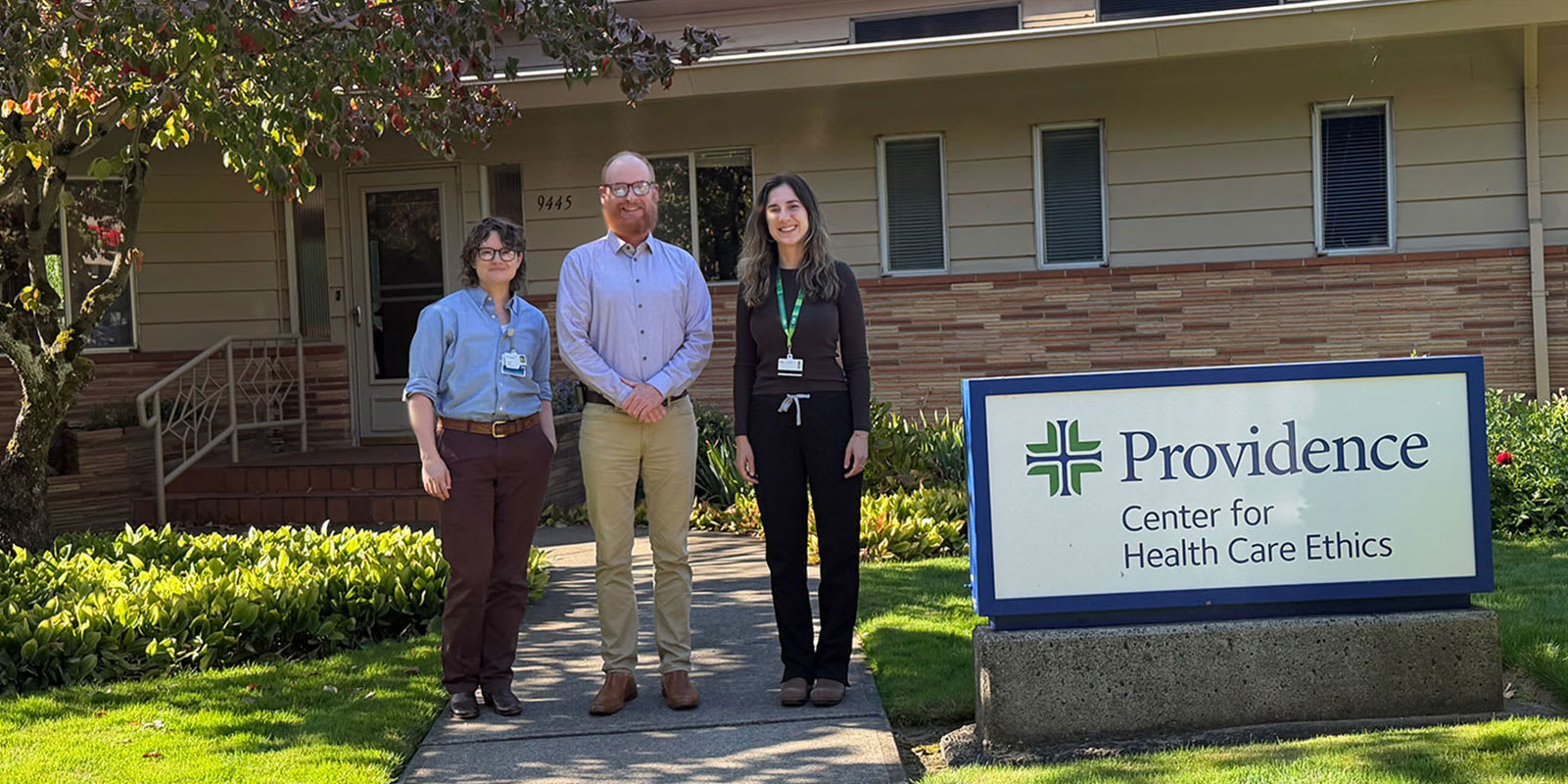
Above: Sara Kolmes, Ph.D., Kevin Dirksen, and Kayla Tabari, RN, with Providence Center for Health Care Ethics.
November 2026
For 25 years, the Providence Center for Health Care Ethics has helped patients, families, caregivers and leaders navigate some of health care’s most difficult decisions with compassion, dignity and respect.
Founded in 2001, the center supports Providence ministries across Oregon while helping prepare the next generation of clinical ethicists.
Understanding the person behind the question
Health care ethics continues to evolve as new challenges emerge, from medical misinformation to artificial intelligence. But Sara Kolmes, Ph.D., a clinical ethicist who recently returned to Portland, says understanding each patient remains essential.
Hospitals can be intimidating, particularly when language, culture, religion, misinformation or past experiences contribute to distrust. Dr. Kolmes says those experiences underscore the importance of understanding the “why” behind a patient’s concerns.
“Every single person who cared for my grandmothers did care about them and tried very, very hard for them,” she says.
Building a community of support
The center also offers education and develops new clinical ethicists through its fellowship program, helping expand access to ethics expertise.
Because they can’t be everywhere at all times, they rely on their outreach to equip caregivers and leaders with the knowledge to make important ethical decisions every day.
They offer monthly educational opportunities, lunch-and-learn sessions, and in-person connections with hospital teams. The ethics team also publishes research, attends conferences and participates in other collaborative programs.

Above: Providence Center for Health Care Ethics on the Providence St. Vincent Medical Center campus.
Kevin Dirksen, the center’s current director, says in the same way they are not rheumatologists or cardiologists, they don’t expect all caregivers to be ethicists.
Instead, it’s about building a community of support.
“We can’t solve all of healthcare’s woes, but we can help provide resources for our clinicians to navigate important issues,” Kevin says.
Related
- See more of our services at Providence St. Vincent Medical Center.
- Read a story celebrating the 75th anniversary of our Providence Medford Medical Center Doctor's Clinic.


