

Julie Kamps felt healthy when her sister texted her with concern. After reading an article about ovarian cancer, her sister learned that symptoms can be subtle and easy to miss, and she encouraged both her sisters to schedule checkups. Julie had no symptoms and no reason to think anything was wrong, but she listened anyway. That decision led to a diagnosis she never expected and began a 17-year cancer journey shaped by family, trusted care and hope.
“I didn’t have any symptoms and had no reason to think anything was wrong,” Julie said. “But my sister had read about ovarian cancer and encouraged me to get checked, so I listened. Looking back, I’m so grateful I did.”
That checkup led to more testing and, ultimately, a diagnosis of stage 3C ovarian cancer. What began with one sister looking out for another became a long care journey with Providence Gynecologic Oncology there every step of the way.
Navigating treatment and finding hope through research
Since her diagnosis in 2009, Julie’s care has included primary surgery, multiple chemotherapy treatments, periods of remission, recurrences, and ongoing maintenance therapy. Through each chapter, she has been cared for by Providence gynecologic oncologist Dr. Melanie Bergman and a team of caregivers.
“I’ve been so grateful for Dr. Bergman and the caregivers at Providence,” Julie said. “They’ve walked through every step with me and helped me feel supported through each part of my care.”
Most recently, Julie had a strong response to chemotherapy through a clinical trial. She has now been disease-free on maintenance therapy for two years. For Dr. Bergman, stories like Julie’s show why research matters.
Ongoing research is creating new possibilities for patients like Julie. It gives patients more options and more hope over time. Dr. Bergman said treatment for gynecologic cancer has changed a lot since Julie was first diagnosed. In addition to surgery and chemotherapy, some patients may now have access to newer treatments, including targeted therapy, immunotherapy and clinical trials. These options depend on each patient’s diagnosis, treatment history and needs. For some patients, these treatments can offer a new path forward when cancer returns or when standard treatments are no longer enough.
“I’m so proud of our clinical trials,” Dr. Bergman said. “If we didn’t have clinical trials, I wouldn’t be able to offer things like this to Julie or other patients. I don’t want to say that clinical trials are guaranteed to work, but when they do, it’s amazing.”
Dr. Bergman said Julie’s outlook has been just as inspiring as her treatment journey.
“Julie is a rock star,” Dr. Bergman said. “She is amazing. She’s always so positive. She tolerates treatment and balances it, but continues to contribute to the community, work and her family. She’s an amazing patient and an inspiring person.”
Turning experience into awareness
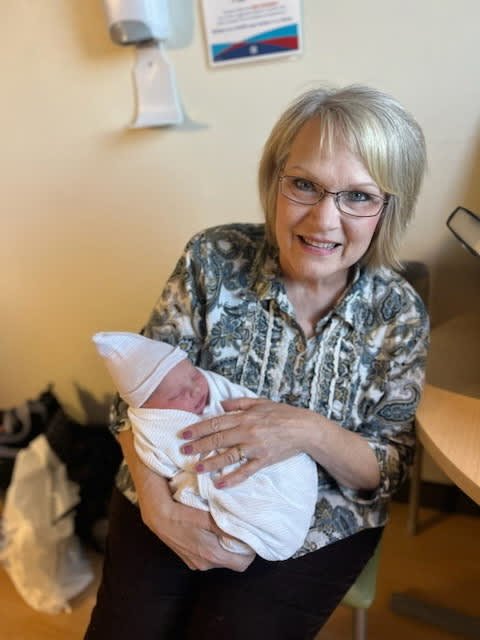
Julie’s experience highlights why awareness matters, especially for a cancer that can be difficult to detect early. Ovarian cancer does not have a reliable routine screening test. That makes it important to know your body and talk with a doctor about changes that do not feel normal for you. Women should talk with their OB-GYN or primary care doctor about ongoing or unusual symptoms, such as bloating, pelvic pain or pressure, belly or back pain, feeling full too quickly, trouble eating, bathroom changes, unusual vaginal discharge or vaginal bleeding after menopause.
For Julie, sharing her story is also about helping families talk openly about their health history. After her diagnosis, her sisters became more proactive about their own care. Julie also chose to have BRCA genetic testing so her daughters would know whether they had a higher inherited risk.
“Since my diagnosis, my sisters have asked their doctors for more extensive testing to make sure they were being proactive about their health,” Julie said. “And I had the BRCA testing too, so I could let my own daughters know. Finding out I didn’t carry that gene gave them some peace of mind, and that was really helpful for our family.”
That ripple effect is what Julie hopes others will take from her story: listen to your body, listen to the people who care about you and do not hesitate to ask questions or find answers if you have concerns.
For Julie, listening to her sister led to answers, treatment and a care team that has walked beside her for nearly 17 years. Now, she hopes sharing her story will help someone else feel informed, encouraged, and less alone.
If you notice ongoing or unusual changes in your body, talk with your doctor. Regular conversations with an OB-GYN can help you understand what is normal for you, when to ask questions and what next steps may be right for you.
For more information about gynecologic cancer care, visit Providence Gynecologic Oncology Center at providence.org.


