

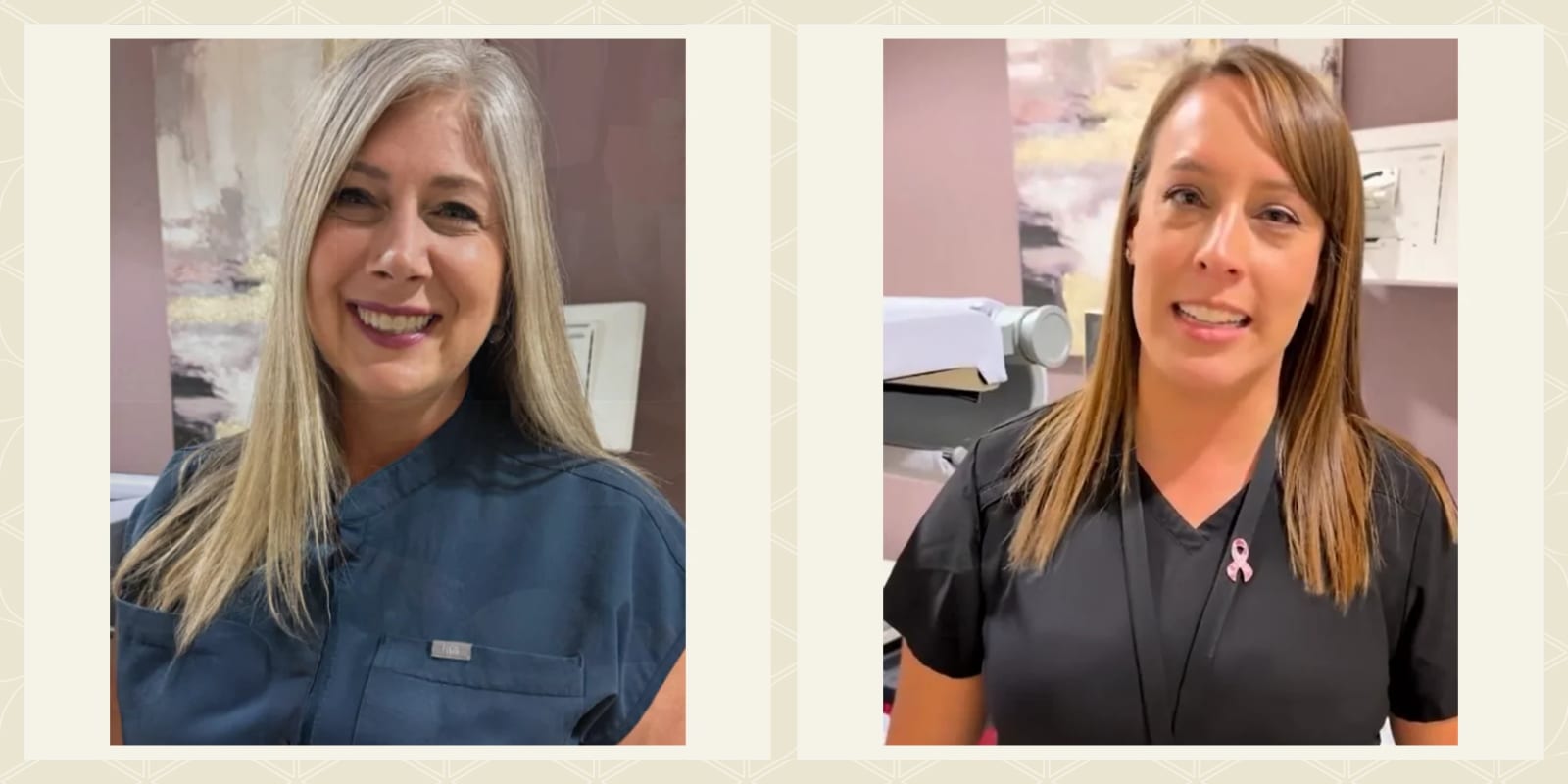
Above: Nicole French, supervisor of Leila J. Eisenstein Breast Center, and Jessica L., mammogram technologist.
October 2026
Many people feel nervous or self-conscious about getting a mammogram. Our care teams are helping ease those concerns by addressing common myths about breast cancer screening.
“If you're embarrassed about coming in for your mammogram, we want to honor your dignity,” says Nicole French, supervisor of Leila J. Eisenstein Breast Center.
Patients receive a gown, and the care team works to keep them covered as much as possible throughout the mammogram.

Watch Nicole's video on Instagram
During a mammogram, technologists use a low dose of radiation to capture detailed images of breast tissue.
“If you're worried about the radiation you get during a mammogram, it's much less than it used to be. Right now it averages about the same as you would get just living normal life over the course of about two months,” Nicole says.
“Mammograms today are very collimated. The beam is very controlled. And so, it really only goes to your breast.”

Watch Nicole's video on Instagram
Mammogram myths: Discomfort and callbacks
While some discomfort can be normal, mammograms are generally low tolerance. Your mammography technologist will work with you throughout the exam to help you feel comfortable while capturing the clear images needed for screening.
“A little bit of discomfort is pretty normal, but we want you to communicate really well with us as mammotechs. We're not here to hurt you. We're here to get a good picture,” says Jessie L., a mammography technologist at Leila J. Eisenstein Breast Center.

Watch Jessie's video on Instagram
Getting called back after a screening mammogram can feel concerning, but it doesn't always mean something is wrong. Sometimes, a radiologist simply needs additional images to better understand an area that looks new or different.
“Your breast can create so many different things that are benign, but oftentimes if a radiologist sees something they think is new or changed, they're going to want a closer look,” Jessie says.
That closer look may include another mammogram, an ultrasound or both. The radiologist reviews the additional images and determines what comes next.

Watch Jessie's video on Instagram


