

For more than 120 years, Providence Alaska's commitment to provide for the poor and vulnerable in our state has been unwavering. In 2025, we invested $66.8 million in total benefit to the communities we serve, including $29.5 million in free and discounted care.
ANCHORAGE, Alaska — When a child is referred to Alaska CARES, a few things have already happened: Some form of trauma has been reported; either the Office of Children’s Services or police have been involved; and there is enough justification to bring the child into the center for treatment.
Alaska CARES is a child advocacy center that serves children who’ve experienced sexual or physical abuse, severe neglect or have witnessed extreme violence.
All these experiences are traumatic, and Alaska CARES helps the healing begin as soon as possible. It serves between 800 and 1,000 youth under 16 each year, most of them in the Anchorage area. A team of care providers – forensic nurses, therapists, interviewers, police, and child protective services – envelops each child, ushering them respectfully through documentation, therapy and other services to help them heal.
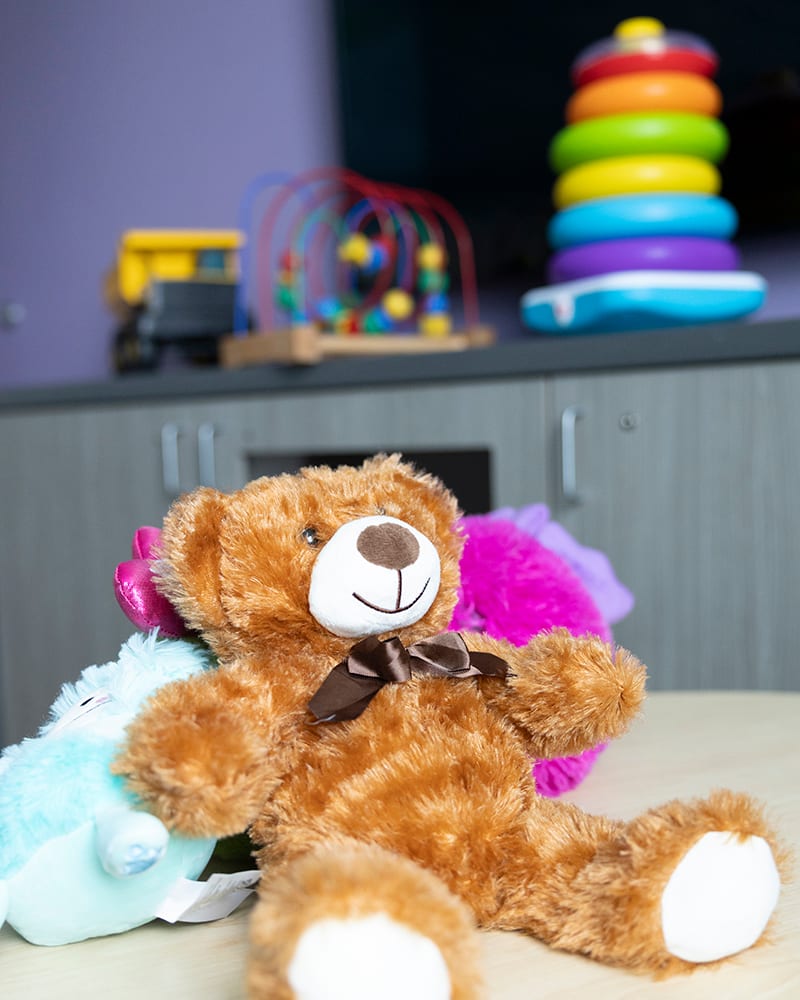 “Foundationally, we created a space where children feel safe,” said Bryant Skinner, director of clinical services. While Alaska CARES has been around for decades – reaching its 30th year in 2026 – its current facility is designed with children specifically in mind.
Providence Alaska community benefit funds have supported Alaska CARES for years and have helped the program grow from just a few employees when it opened in 1996, to 22 employees today. Community benefit funds allowed the space to grow with the needs of the community, and in 2019, the new facility opened, offering all services in one location. In 2025, Providence Alaska provided $1.9 million in support.
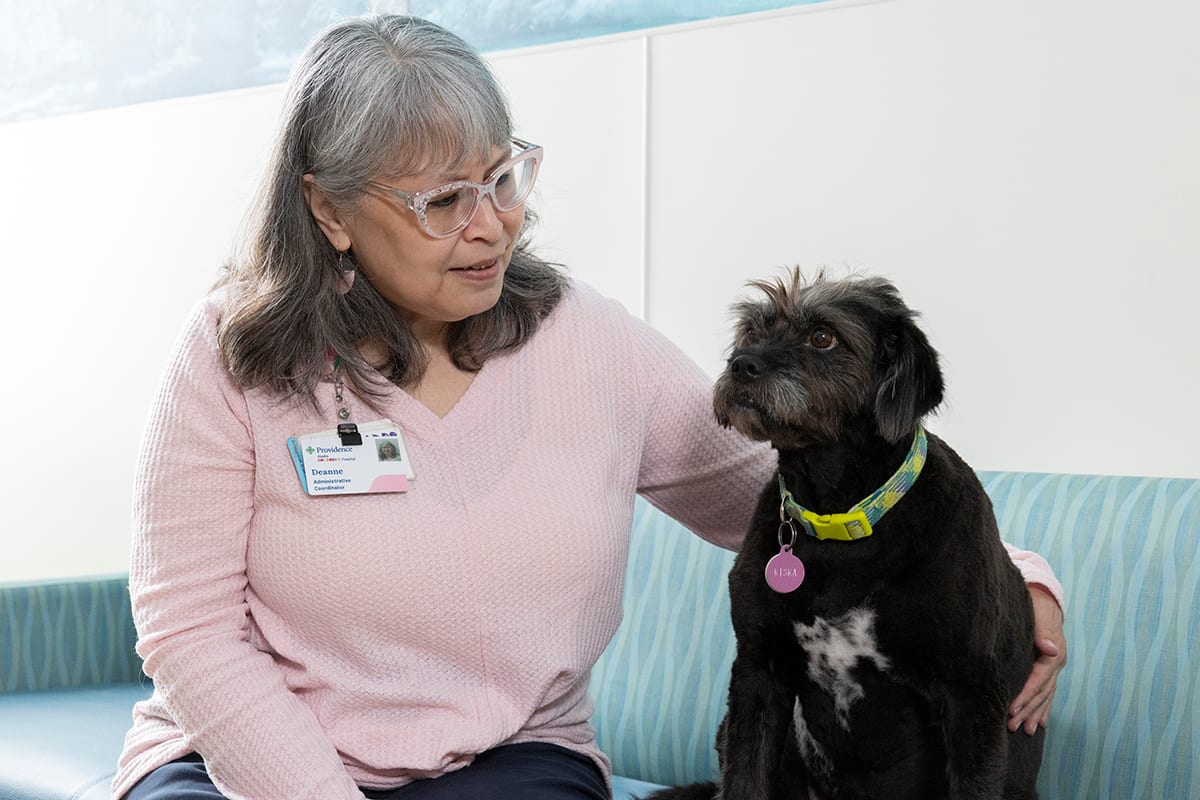
“I’ve been here since we first opened the doors,” said Deanne Antioquia, administrative coordinator. “We started with just four people, and back then, there were no child advocacy centers in Alaska. The science proves that this model is beneficial to the child – and to the case – when you are not having the child repeat their story over and over again.”
The unassuming building is discreet from the outside, but inside, children are met with colorfully painted murals, stained glass windows, and artwork on the walls. All services can be assessed here, so victims are only asked to share their story once without the need to travel from police station to hospital, to therapist’s offices and beyond. The Anchorage Police Department, Office of Child Services and Southcentral Foundation, a longtime partner, are all co-located in the same building.
“We are serving in a way that is compassionate and trauma-informed,” Skinner added.
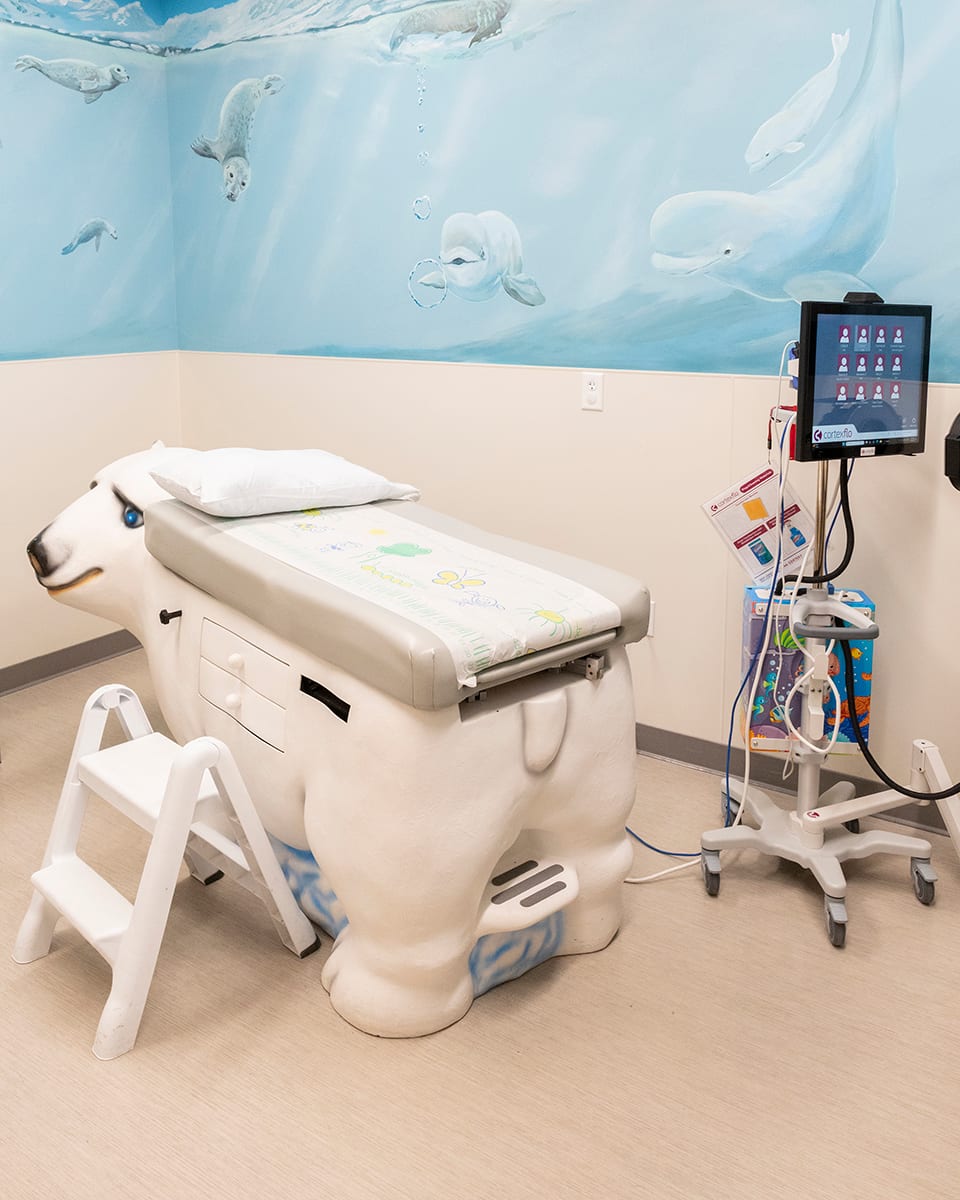
Sixty-five percent of Alaska CARES’ child clients are seen for concerns of sexual abuse of some kind, and 70% are under the age of 12. If a child is brought in by police, she first will have her basic vital signs taken. From there, she will walk just a few steps away into one of the waiting rooms, covered in colorful Alaska wildlife-themed wall murals and filled with toys: the Eagle Room, the Puffin Room, or the Arctic Fox Room. Skinner said on their busiest day, they once completed 17 evaluations. Fortunately, it is usually fewer than that.
If needed, the child will be guided to another wing of the building, which houses the forensic interview rooms – named Moose, Bear and Salmon. It is here that the child can tell her story with a trained forensic interviewer, who is carefully documenting and recording the session.
When an immediate forensic medical exam is necessary, the child is guided a short distance to the medical exam suite in one of the three examination rooms.
During the entire CARES evaluation process, the assigned advocate from Providence or Southcentral Foundation works with the family and the team to ensure the services provided are well coordinated and trauma informed. The advocates continue to work with families after the initial evaluation and provide valuable support that the families need.
“We really don’t want kids waiting too long for any of this,” Skinner said, “because they get tired, they are upset. We try to make it go as smoothly as possible.”
Day by day, child by child, the small army of people who help them heal continues to work tirelessly for every victim of trauma or abuse. Today, access to therapy services is quicker, collaboration among agencies more encouraged, and each case is ushered from beginning to end, with the constant support of people who care.
“We are here to support these children who are going through some horrific things. Someone once asked a previous co-worker, ‘How can you do this kind of work? It’s so emotional.’ And I said to her, ‘How can I not? I’m doing this for these kids who don’t have a voice.’”
About the Author
More Content by Providence News Team


