


New research from Providence suggests that a specialized training for frontline clinicians could help address drivers of healthcare workforce burnout.
Burnout among physicians, nurses and other providers is a persistent challenge facing the U.S. healthcare workforce. In 2022, near the height of the COVID-19 pandemic, the U.S. Surgeon General declared healthcare worker burnout a public health crisis. Today, nearly half of physicians and 45% of nurses still report symptoms.
Responding to this challenge is vital to building and maintaining a strong, healthy healthcare workforce. New research from Providence suggests that a well-being-focused leadership training program for frontline clinicians could help.
Learn more about the program and research below or read the peer-reviewed paper at BMC Health Services Research.
Developing leaders from the front lines
In 2023, building on the success of a pandemic-era pilot program that reduced burnout among participants, Providence physician leader Dr. Tricia James designed and implemented a 15-month well-being leadership development program called the Clinician Wellness Council (CWC).
Unlike many leadership programs, the CWC intentionally recruits clinicians who do not hold formal leadership roles. Participants identify an intervention group, often a multidisciplinary team, and focus their leadership efforts on improving well-being within that group.
Grounded in transformational and distributed leadership theories, the CWC’s goals include:
- Expanding leadership capacity among frontline clinicians.
- Helping clinicians identify and address local drivers of burnout.
- Strengthening a culture of well-being across the organization.
- Increasing clinicians’ sense of influence and autonomy in the workplace.
Promising early results
A prior study co-authored by Dr. James saw a significant decrease in burnout (from 47% to 13%) among the 21 clinicians who participated in the pilot CWC cohort.
The research also linked the CWC to improvements in workplace influence and team well-being. These and other findings were published in the journal, Healthcare.
Now, newly published qualitative research offers a closer look at participants' own experiences in the program.
Understanding participant perspectives
Expanding on their earlier research, Dr. James and her team conducted four focus groups with all 21 clinicians from the first CWC to hear firsthand how the program influenced their knowledge, mindset and approach to addressing workplace burnout.
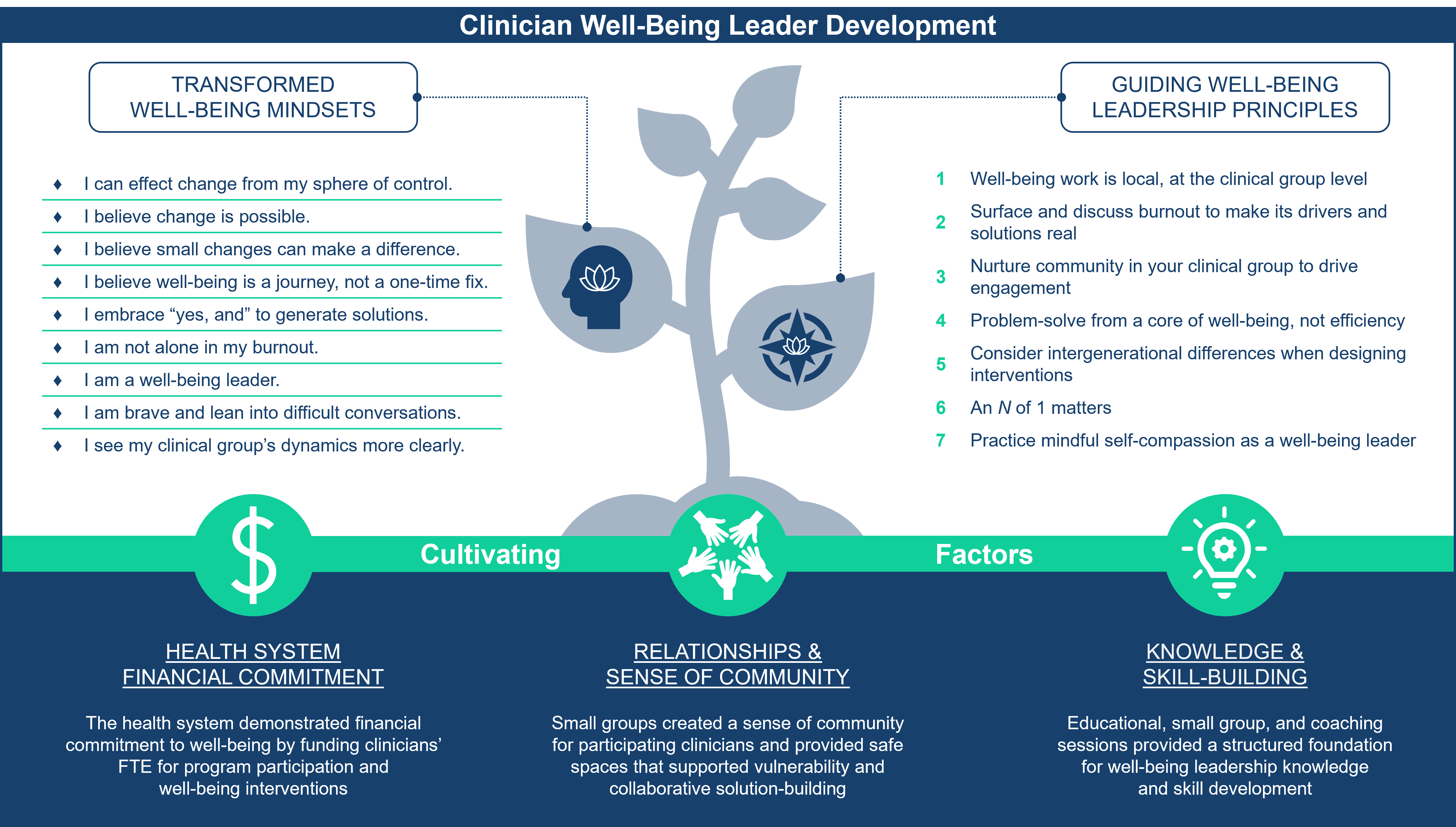
Participants described the CWC as a transformational experience that helped them think differently about their ability to create positive change at work. They reported reduced burnout, greater confidence in their ability to influence their workplace, and the development of other skills to support well-being within their teams.
The study also identified three key elements that participants said supported their growth as well-being leaders:
- Health system investment in the program
- Relationships and a sense of community with peers
- Knowledge and skill-building opportunities
Implications for health systems
“While additional research is needed, our findings suggest that the CWC had a positive impact for participants,” explains Dr. James. “By supporting clinician well-being and building leadership capacity across clinical teams and among frontline healthcare workers, programs like the CWC can help address burnout and build a stronger, more resilient workforce for the future.”
Read more in BMC Health Services Research: A Qualitative Exploration of Clinicians’ Experiences and Perceptions of a Well-Being Leadership Development Training Program.
Related Content


