


This event took place on September 10, 2025. The lecture recording and Q&A are available below.
Updates on Hereditary Hemochromatosis
Join Providence Cancer Institute's hematology expert, Christine Johnson, M.D., to learn more about updates on hereditary hemochromatosis. In this live event, Dr. Johnson will discuss current updates and research, including a shift towards non-invasive diagnostics, advancements in understanding genotypes as risk-factors, and updated screening and management strategies.
Learning Objectives
· Updates on screening and workup for iron overload
· Understanding genotypes as risk factors for clinical iron overload
· Who needs treatment?
· Management strategies
· MASLD and alcoholic steatosis as other causes of iron overload
About the Speaker
 |
Dr. Christine Johnson is an expert hematology oncologist who recently shifted the focus of her practice to classical hematology. Dr. Johnson brings a breadth of knowledge and advanced diagnostic skills to Providence Cancer Institute and is known for her excellence in educating clinicians and patients.
|
Event Recap and Q&A
Virtual Oncology Lecture: Updates on Hereditary Hemochromatosis
Should young patients who are first degree relatives of a homozygote be tested for the mutation, or is it better to wait and monitor their iron levels?
The best screening tests for these patients are an iron panel and ferritin level.
For patients who are young enough where they aren’t expected to know if they are high iron loaders or not, mutation testing is appropriate as a healthcare resource. Continue monitoring their ferritin levels and iron percent saturation, and if you’re seeing high ferritin levels (males > 300 / females > 200) and an elevated TSAT it’s time to run a hemochromatosis mutation panel.
Does a high ferritin level mean iron overload?
Due to an increase in the rate of testing, there have been increased incidental findings of high ferritin levels. The most common reason for elevated ferritin and TSATs in the general population is MAFLD and dysmetabolic iron overload syndrome, but because it is an acute phase reactant it can also be seen for example in patients with infection, diabetes, and cardiovascular disease. It is far less common for high ferritin levels to be caused by alcoholic liver disease and hemochromatosis.
In the setting of no clear symptoms of malignancy, general recommendations are to ensure age-appropriate cancer screening is up to date. An iron % saturation >45 and ferritin >300 is more suspicious for clinical iron overload.
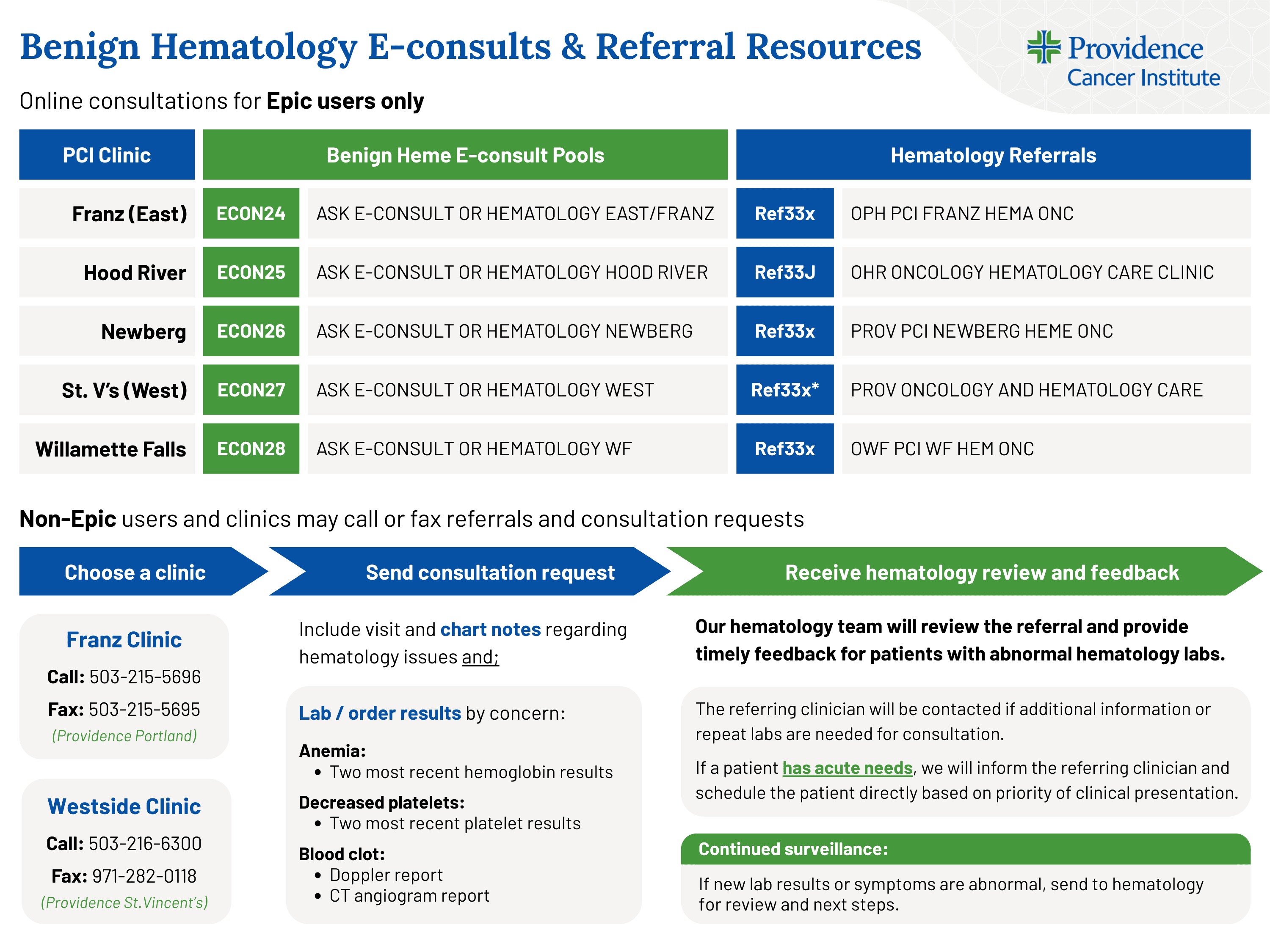
What is the best way to request a consultation?
Oncology Lecture Series
Providence Cancer Institute’s virtual oncology lecture series provides busy clinicians with critical updates and clinical pearls from experts they can trust. To find out more about our online clinical learnings or how we collaborate with and support referring clinicians, visit our website.
When it's cancer, choose Providence.
To keep up with the research breakthroughs that are reshaping cancer care, subscribe to our Finish Cancer Through Research newsletter.
Related news
A new cancer therapy at Providence helps immune cells stand their ground
A new generation CDK4 inhibitor study for people with HR+ HER2- breast cancer
