

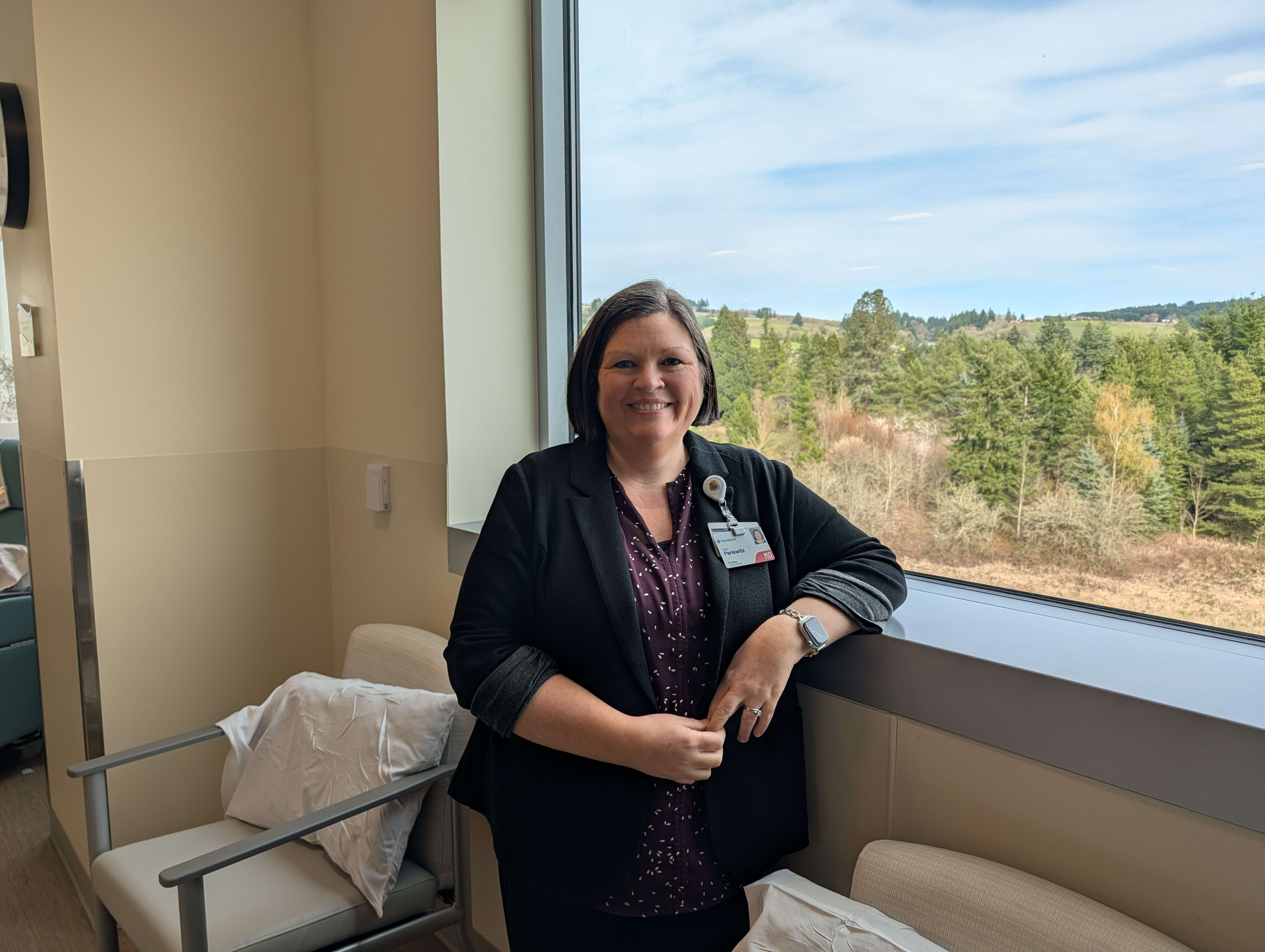
Colon cancer is increasingly being diagnosed in younger adults, which can make it hard to know when to start screening and which symptoms to take seriously. This Q&A with Kelly Perlewitz, M.D., medical director, Hematology/Oncology Division at Providence Cancer Institute, answers common questions about updated screening guidelines, what rectal bleeding could mean, how family history affects risk, the differences between stool-based tests and colonoscopy, and practical steps you can take to lower your risk.
Q: I'm only in my 40s, do I need to get screened?
Absolutely, yes! The guidelines have changed. We now recommend that everyone start screening at age 45, even if you feel perfectly healthy. This change happened because we've seen a concerning rise in colon cancer among younger adults—people in their 40s and even 30s. In fact, colon cancer is now the leading cause of cancer death in men ages 20-49 and the second leading cause in women in that age group.
If you have a family history of colon cancer or polyps, you may need to start even earlier—sometimes as young as 40, or even 10 years before the age your family member was diagnosed. Don't wait! Screening saves lives by catching cancer early when it's most treatable or even preventing it altogether by finding and removing polyps before they turn into cancer.
Q: I've had some bleeding, but it's probably just hemorrhoids, right?
Please don't assume it's just hemorrhoids. While hemorrhoids are common and can cause bleeding, rectal bleeding is also one of the most common warning signs of colon cancer, especially in younger people. Nearly half of people diagnosed with colon cancer under age 50 had rectal bleeding as their first symptom.
Here's the key difference: Hemorrhoid bleeding is usually bright red on the toilet paper, while cancer-related bleeding may appear as blood mixed in with the stool. But there can be overlap. Even if you do have hemorrhoids, that doesn't rule out something else going on higher up in the colon. Any rectal bleeding deserves a proper evaluation with a colonoscopy, especially if it doesn't resolve quickly, if you have other symptoms like abdominal pain or changes in bowel habits, or if you're over 40. Don't delay; early detection makes all the difference.
Q: If I don't have a family history of colon cancer, am I still at risk?
Yes, you're still at risk. Here's an important fact: About 70-80% of most cancers occur in people with no family history at all. While having a family history does increase your risk about two-fold, the majority of cases are what we call "sporadic," meaning they happen in people without any family connection to the disease.
Everyone has about a 4% lifetime risk of developing colon cancer, which is why screening is recommended for all adults starting at age 45. Your risk can be influenced by many other factors beyond family history, such as your diet, weight, physical activity level, smoking and alcohol use. So, even without a family history, you still need regular screening.
Q: What is the biggest difference between a stool test and a colonoscopy?
They're very different tests with different strengths. A colonoscopy is the most comprehensive option. Colonoscopy detects about 95% of cancers and is an excellent way to find precancerous polyps. It allows us to directly visualize your entire colon with a camera, and if we find polyps, we can remove them during the same procedure. It's both a screening test and a treatment. You only need it every 10 years if your screening results are normal.
A stool-based DNA test is one you can do at home. It's convenient because no bowel prep is required. It detects about 92% of cancers, which is quite good, but only catches about 42% of advanced polyps, which is significantly lower than colonoscopy. You need to repeat it every three years. The important thing to know is that if your home stool test is positive, you'll still need a colonoscopy to follow up.
Both are good options—the best screening test is the one you'll actually do. Some people prefer the convenience of a stool test, while others want the thoroughness and "one-and-done" aspect of colonoscopy.
Q: What can I do to lower my risk of getting colon cancer?
There's actually a lot you can do! While we can't control everything, like your age or genetics, many risk factors for colon cancer are within your control. The most important lifestyle changes include: maintaining a healthy weight through regular physical activity. Aim for at least 150 minutes of moderate exercise per week. Eat a diet rich in fruits, vegetables, whole grains and fiber while limiting red meat and avoiding processed meats like bacon, sausage and deli meats. Limit alcohol consumption, and if you smoke, quitting is one of the best things you can do for your overall cancer risk.
Research shows that people who follow these healthy lifestyle recommendations can reduce their colon cancer risk by about 30-40%. And of course, the single most powerful tool we have is regular screening, which can prevent colon cancer by finding and removing polyps before they ever become cancer.
Think of it as a combination approach: Live healthy to reduce your risk, and screen regularly to catch anything early. Both matter.
More questions?
Providence Cancer Institute is one of the leading providers of cancer care in Oregon and a global leader in immuno-oncology. Our Colorectal Cancer Program offers information on screening and prevention. Find out more and talk to a doctor if you have questions or concerns.
Related news
Celebrating oncology social workers: Compassion, expertise and impact
Clinical trial seeks better first-line therapy for follicular lymphoma
Where curiosity meets impact: Women in science at Providence Cancer Institute


