

From paramedics to cardiac rehab, local care teams work together to support heart patients at every stage
A daily walk, a weekly swim or a regular round of yard work keeps you active. Over time, routines like these can also become a reliable way to notice how your heart is doing.
That awareness matters when it comes to acute coronary syndrome, a potentially life-threatening medical emergency caused by a sudden reduction or complete blockage of blood flow to the heart; otherwise known as a heart attack..
Chest pain can signify a heart attack. However, signs are not always what people expect.
“Symptoms vary a lot from person to person,” says Dr. Cynthia Warner, a cardiologist and the medical director of cardiology with Providence Medical Group. “Chest pain is common, but some people notice significant shortness of breath, palpitations, lightheadedness, nausea or extreme fatigue. If you experience these symptoms, call 911.”
Behind abdominal pain, chest pain is the second most common reason people visit the emergency department at Providence Regional Medical Center Everett and care often starts before patients arrive.
Paramedics assess them in the field and call ahead so the emergency team is ready. Physicians there continue the evaluation and bring in interventional cardiologists, who can open a blocked artery in the cardiac catheterization lab, often by placing a stent.
Patients are evaluated and cared for by the cardiology team with comprehensive care including medication and further studies to guide treatment in the hospital. The cardiac surgeons are involved if there is a multivessel coronary disease that can’t be addressed by stenting.

Dr. Cynthia Warner, medical director of cardiology with Providence Medical Group.
Patients then continue with their cardiology care as an outpatient with cardiology clinics and cardiac rehabilitation in addition to following up with their primary care providers.
“The process involves many different groups of physicians in the hospital in order to run smoothly and quickly,” Dr. Warner says. “That team effort plays a big role in positive outcomes for patients.”
That collaborative effort has not gone unnoticed.
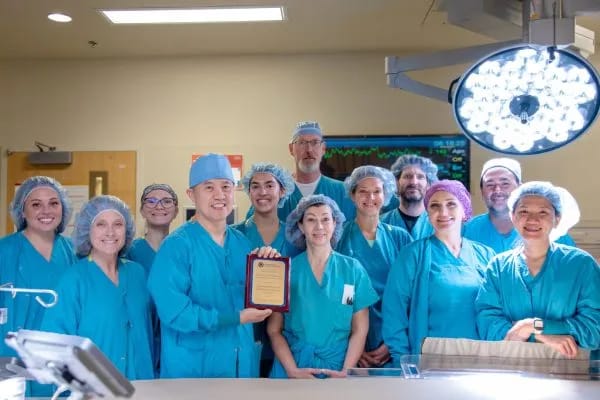
In 2026, the Cardiac Care Outcomes Assessment Program (COAP) presented the hospital with Performance Recognition Awards for both cardiac surgery and percutaneous coronary intervention (PCI) – a procedure performed to open obstructed arteries.
This marked the hospital’s first-ever PCI award, reflecting its standing as the third-highest volume provider for PCI procedures in the state.
Across Washington, the most serious type of heart attack is becoming less common, a trend Dr. Warner credits to improved risk factor awareness, management and earlier care.
Cardiovascular risk rises with age, high blood pressure, obesity, inactivity, smoking and family history.

From the first 911 call to cardiac rehab, a coordinated team helps heart patients get fast, effective care.
Dr. Warner encourages people to manage their blood pressure and cholesterol, not smoke, eat well with a diet low in saturated fats, exercise, learn their family history and have regular checkups for anyone who has risk factors or experiences symptoms.
Everyday activity and exercise is a great way to monitor yourself.
“If you develop symptoms with your normal exercise routine or if the amount of activity you can handle changes, that’s a good reason to check in with your doctor,” she says.
To learn more or find a Providence Medical Group physician near you visit providence.org. Follow Providence Regional Medical Center Everett on Facebook @ProvidenceSwedishNorth.
Schedule your flu shot at your local Providence clinic or pharmacy before the holidays to help protect yourself and the people you love this season.


