

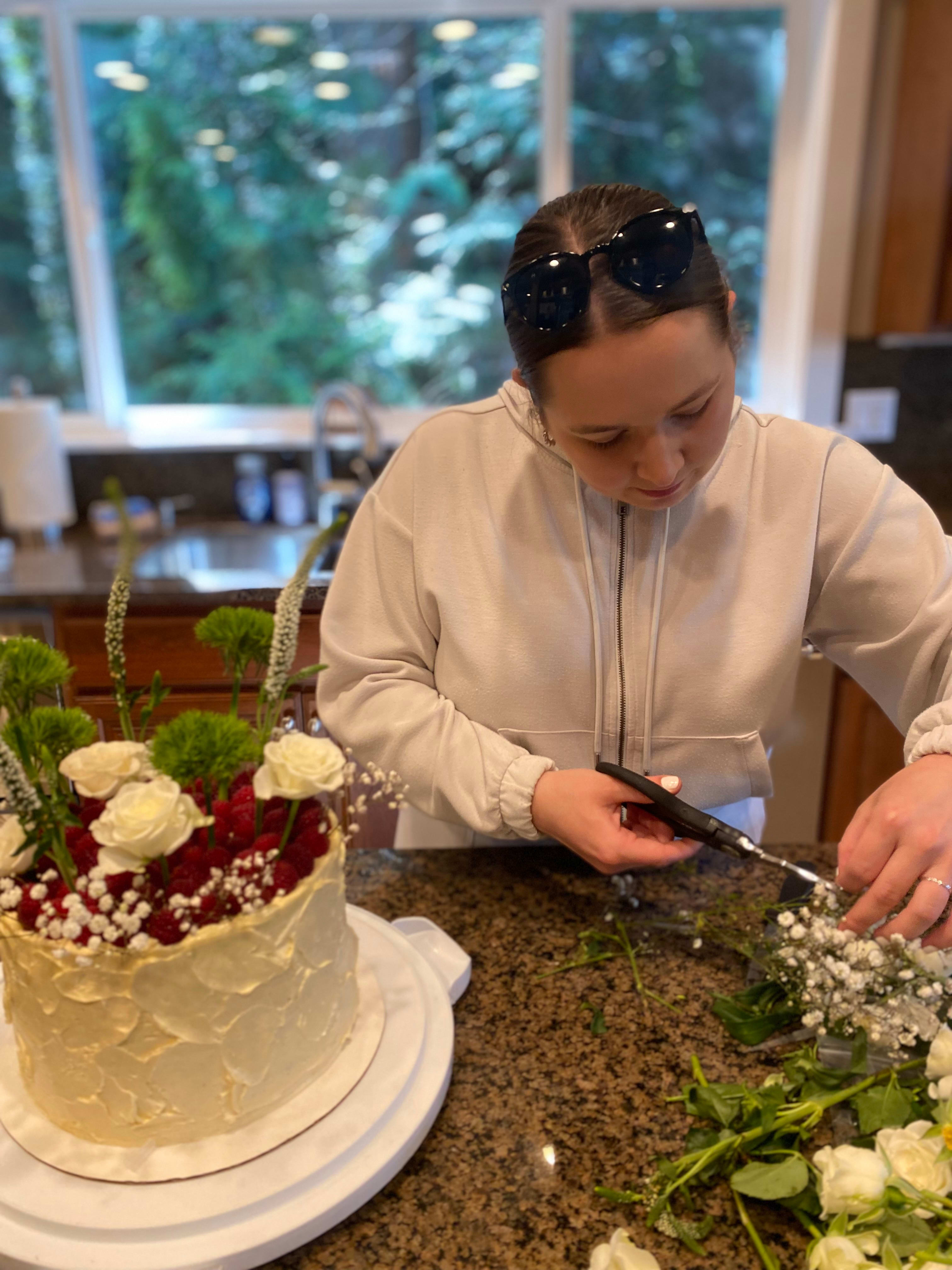
Olivia Burke had never created a long cake before, let alone one that was over five feet in length. But her best friend was getting married, long cakes were trending and, frankly, she was up to the challenge.
She laid out four Earl Grey sheet cakes on a custom-cut board and frosted them together with a white chocolate whipped ganache and fragrant blackberry lavender jam.
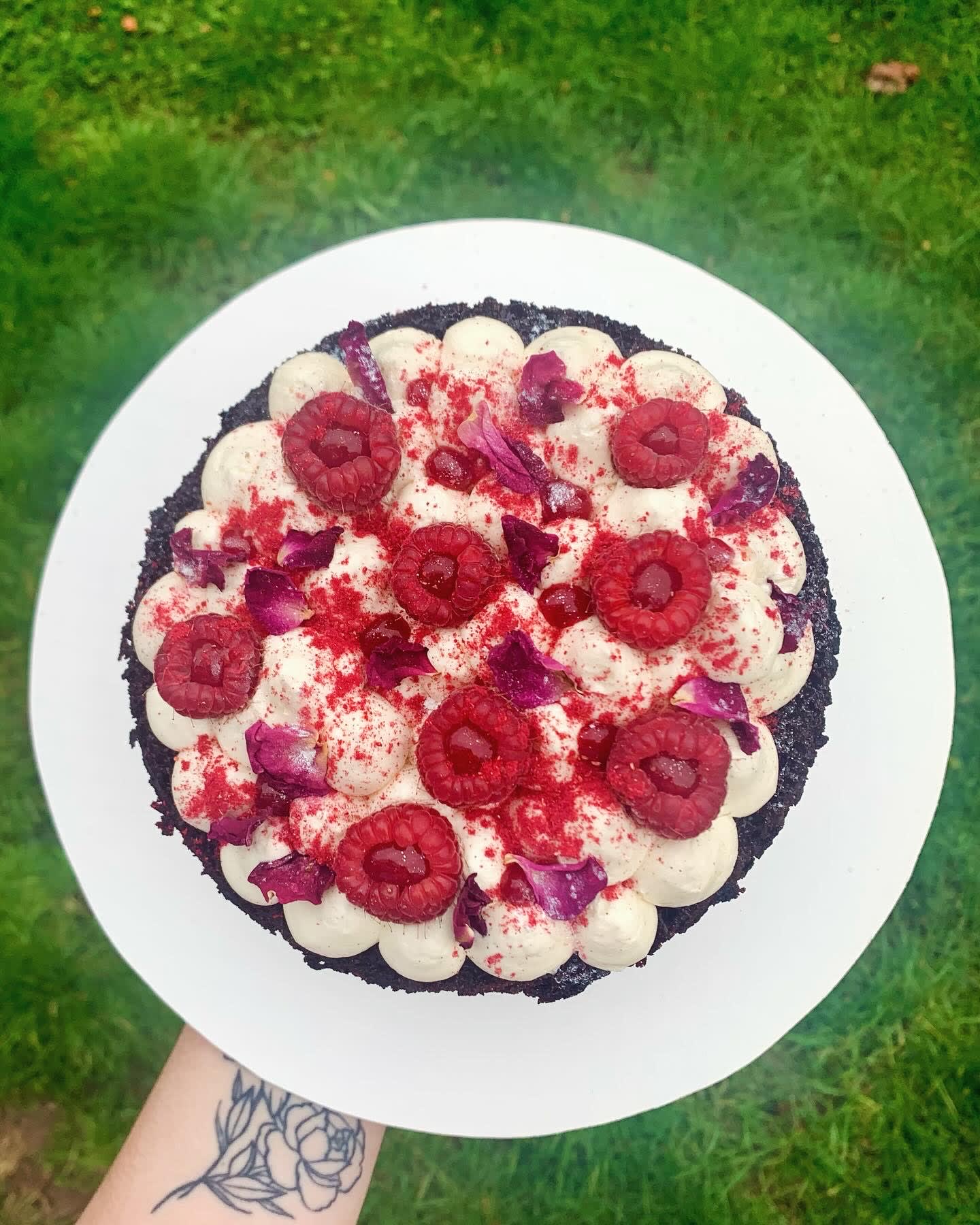
She also baked an olive oil chiffon cake topped with passion fruit curd and raspberry compote; a two-tier chocolate espresso cake with peanut brittle feuilletine for the bride and groom to cut, and an assortment of other mouth-watering delectables for the wedding.
“It was a huge production,” Olivia recalled. “I’m overwhelmed just thinking about the process!”
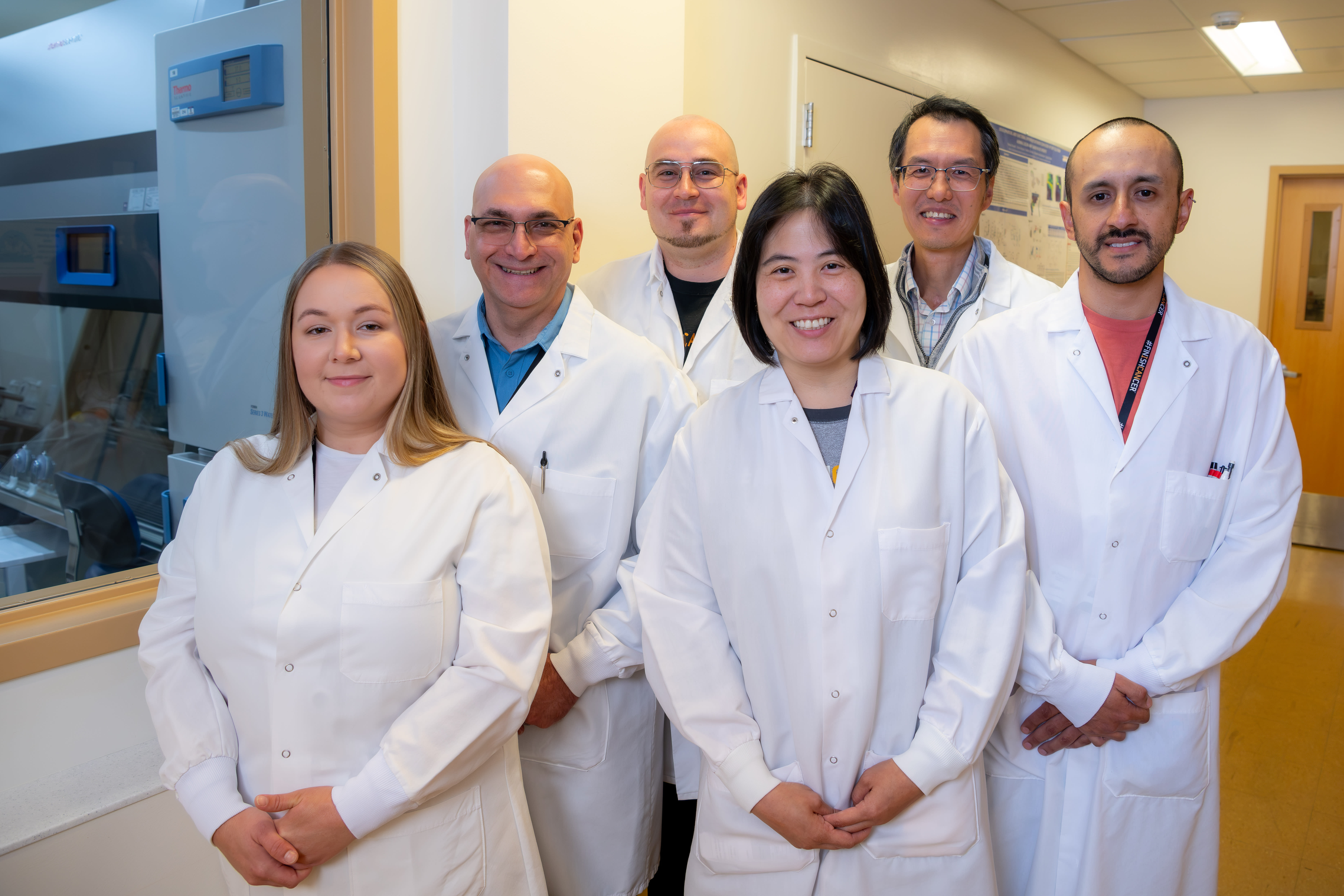
You'd never guess baking is only a hobby for Olivia. She spends most of her time in the Human Application Laboratory, or HAL, at Earle A. Chiles Research Institute, the research arm of Providence Cancer Institute. HAL is part of the Adoptive Cell Therapy Lab, led by Eric Tran, Ph.D.
As a senior research associate, Olivia and the HAL team create personalized cell therapies for patients. They start with a sample of an individual patient’s white blood cells, select the immune cells that fight disease and engineer them to recognize a mutation in that patient’s particular cancer. Over 10 days, the team grows those engineered cells from a few million into billions, then infuses them back into the patient. The work requires highly detailed planning and execution.
Science merges with creativity
Science is partly to blame for Olivia’s baking passion. In the fourth grade, she showcased the rising power of yeast to leaven dough at the elementary school science fair. “I made rolls, explaining the science behind it and why yeast does what it does.”
Then she became obsessed with cupcakes.
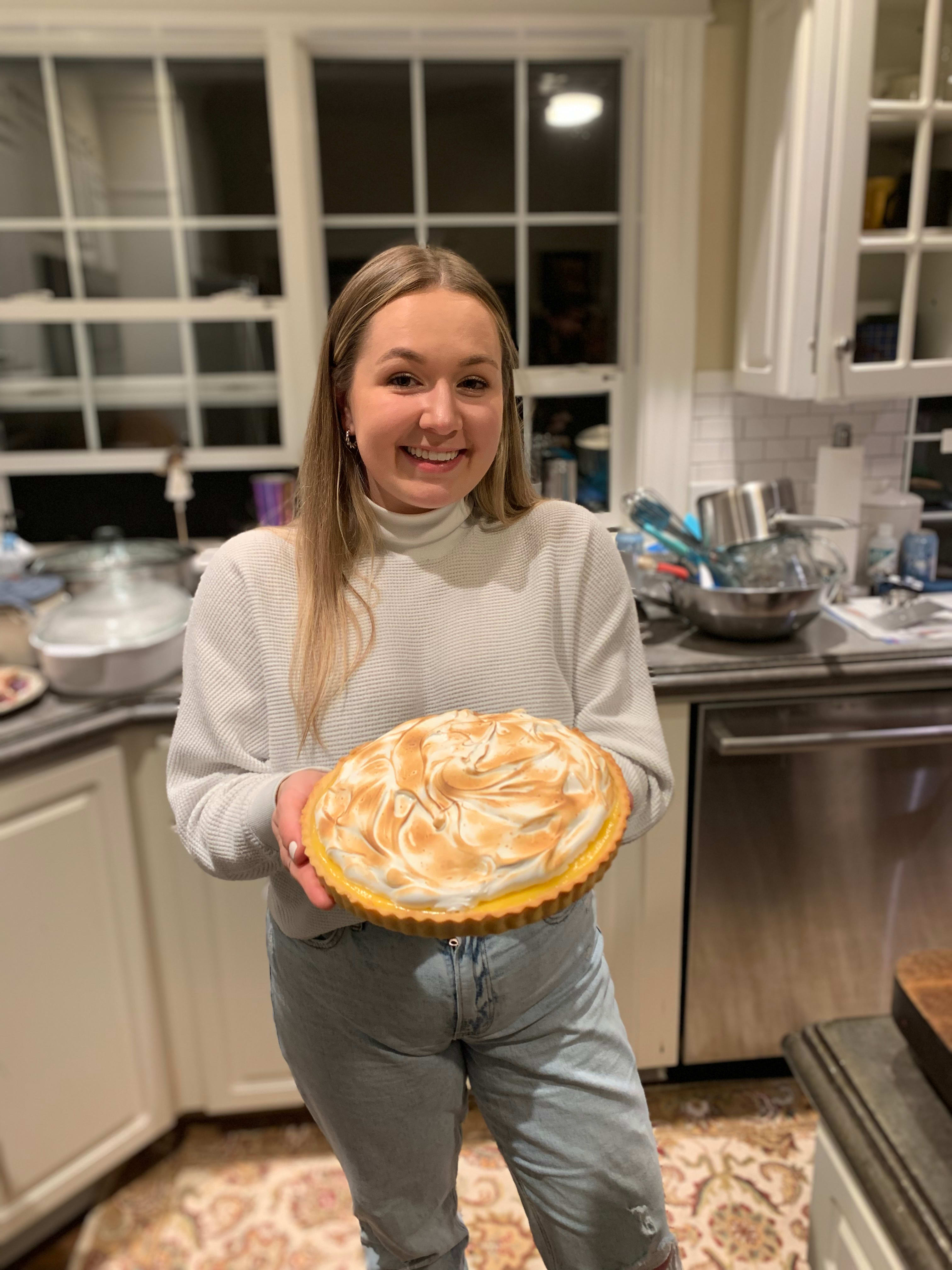
Through high school and college, Olivia’s interest in baking continued to flourish, and so did her interest in science. Initially, Olivia planned to go into medicine, but shortly after taking the MCAT, the Covid-19 pandemic hit. She took a job at an antibody purification lab instead and decided she liked the work. “There’s a kind of stability to perfecting one thing,” Olivia said. But the need to continue growing nudged her to look elsewhere. In 2024, Olivia jumped at the chance to join Dr. Tran’s lab.
As it turns out, a research lab and a home kitchen call for a lot of the same habits.
The lab in the kitchen
In research, you test, retest and refine until the kinks are straightened out of the process. Olivia bakes the same way, tweaking the recipes and then taking it one step further by converting one cake into mini cakes, slab cakes and tiered versions. “I test recipes to their limits,” she said.
Like the lab, Olivia’s kitchen runs on detailed notetaking. She handwrites recipes, digitizes them into organized folders and never overwrites a version. She learned the hard way. Once she tweaked a cinnamon roll recipe so many times that she forgot the original, and with it any way of knowing what changes helped or hurt the recipe. Any scientist will recognize the problem. Without a baseline, you can’t interpret your results.
Olivia also relies on spreadsheets. At work, Excel is used to map out and track experiments, chemical expiration dates and other details. In the kitchen, it helps her manage ingredients, tally them and generate a shopping list. Olivia also stores her recipes in Excel, where it can help her easily scale a recipe up or down based on bakers’ percentages.
“It doesn’t sound like fun, but I love to be prepared,” Olivia said.
But even the best laid plans can go sideways. When they do, Olivia’s two worlds work the same way. In the lab, an unexpected result sends a researcher back through the variables to find out what changed. In the kitchen, a cake that is too dry, for example, gets the same treatment. Olivia digs into the “why,” sometimes using online research or a Substack called “Kitchen Projects,” which breaks recipes down, going into bakers’ percentages and proportions, so she can see which ingredient or ratio made the difference.
Reverse engineering a masterpiece
One of her favorite experiments started with a dessert she couldn’t stop thinking about. Malka, a restaurant that is now closed, served an unusual chocolate cake that Olivia described as “life changing.” During the pandemic she brought a slice home to figure out how it was made, using only the description on the menu, the taste and texture to guide her explorations in the kitchen.
Her findings? The cake was dark chocolate with an espresso soak, a layer of miso-roasted banana caramel, espresso whipped custard with shaved chocolate and orange zest, toasted coconut and a bruléed banana.
“It was an eye-opening moment for me," Olivia said. "I realized I could push the envelope in the kitchen sometimes."
It’s not all about spreadsheets
As much as Olivia enjoys rigor in the kitchen, in the end it’s the people who take gleeful bites of her baked goods that inspire her to create and share.
 That spirit of sharing can be traced to her family, and to the holidays they spend crowded together in the kitchen. Her dad, a retired engineer, shares her eye for detail and offers specific, unfiltered feedback. Her mom doesn’t like to cook but loves helping in the kitchen, surrounded by the chaos and joy. Her brother is a chef at a Portland-area restaurant – he’s the quiet perfectionist of the family. When he was in culinary school and Olivia was in college, they challenged each other, sharing what they were learning in their respective kitchens. They’ve been kitchen partners ever since.
Moral support and dishwashing are provided by her partner, Daniel. “Any baker or cook knows how important dishwashers are! He’s the reason our kitchen is clean,” Olivia said.
 |
 |
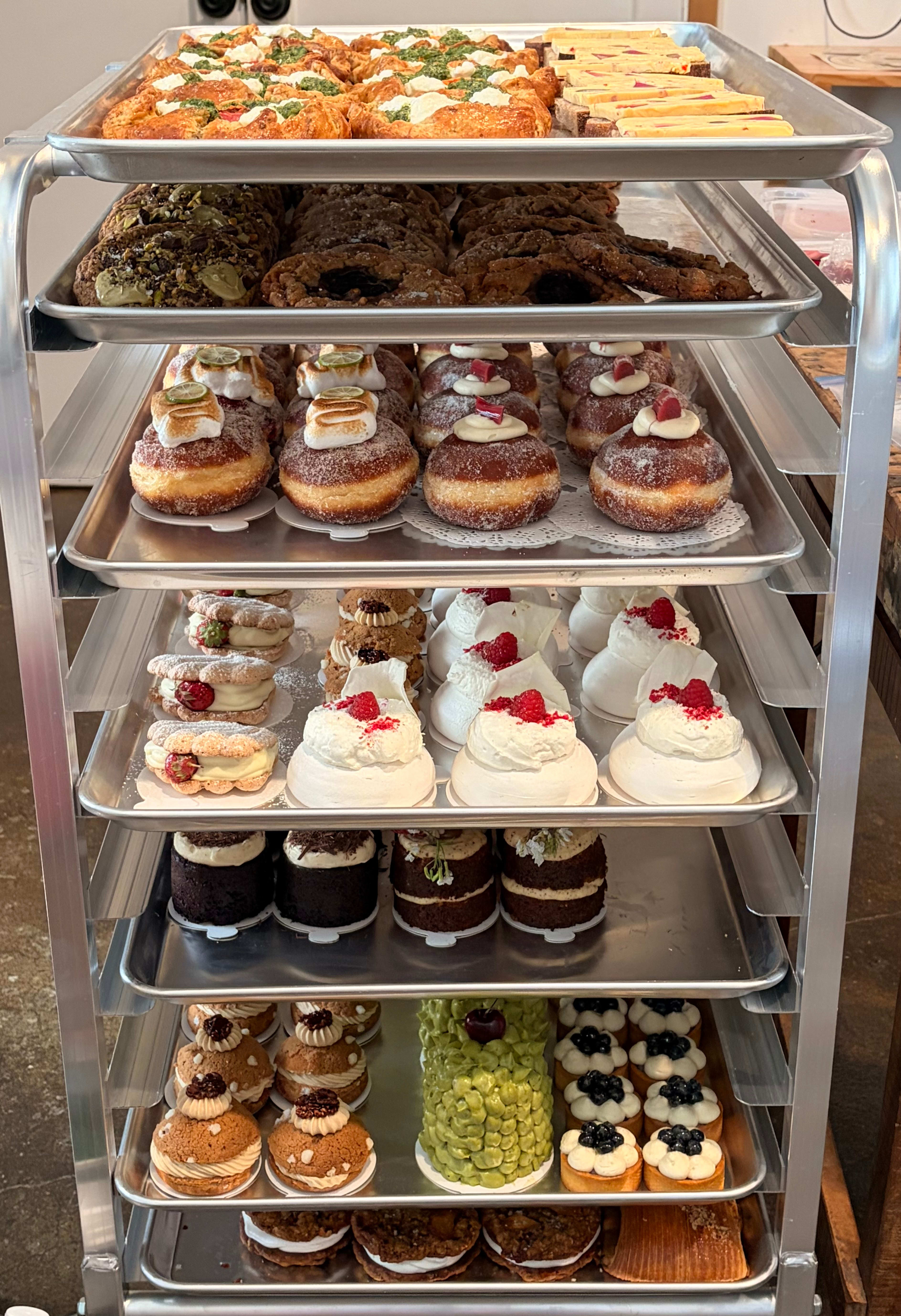 |
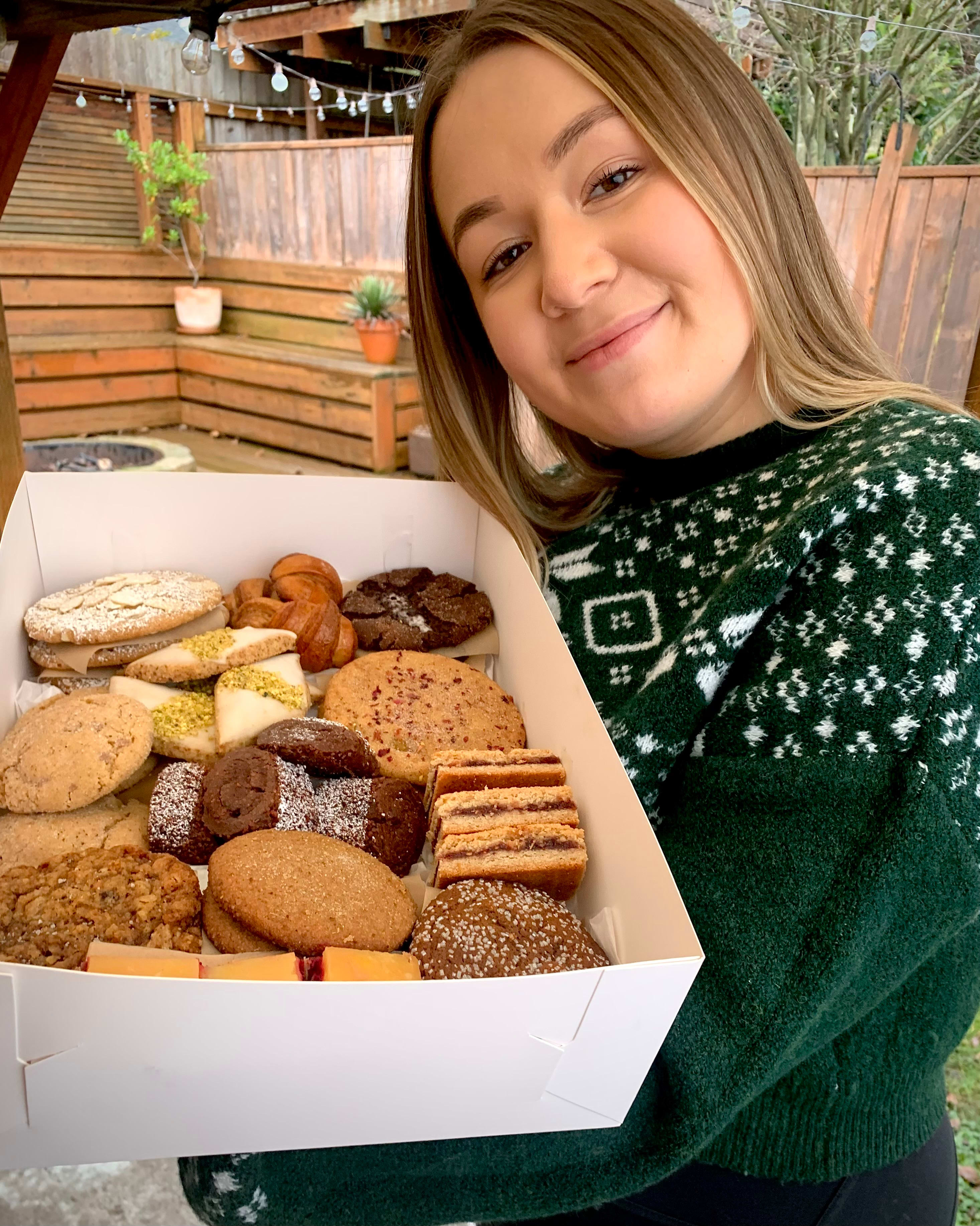
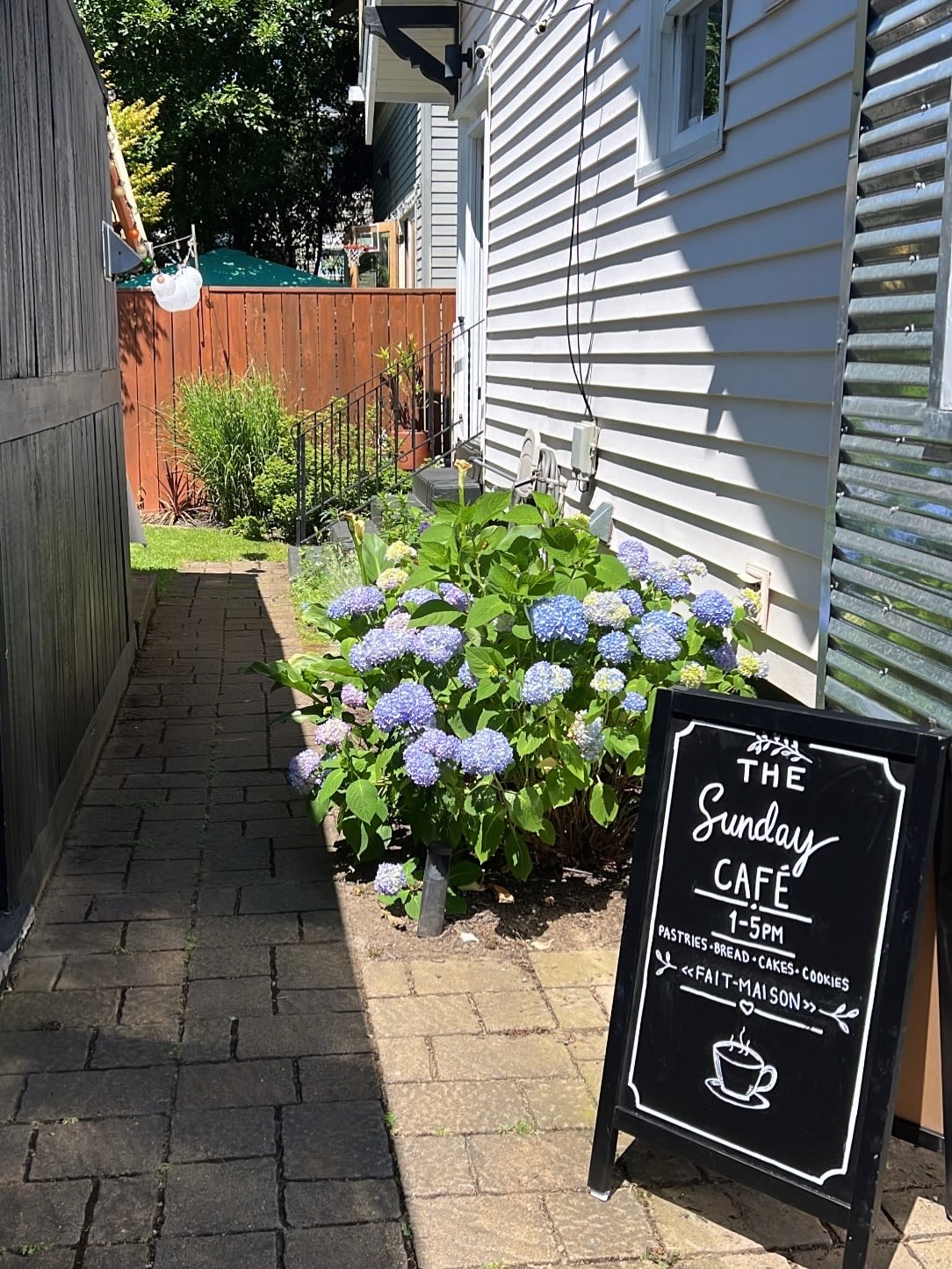
Every couple of months, Olivia holds a pop-up café in the 550-square-foot apartment she shares with Daniel. For five hours on a Sunday, invited guests peruse a chalkboard/ listing the day’s baked goods, choose their favorites, box them up and then gather at café tables in the backyard to enjoy Olivia’s creations with cups of coffee.
It takes months of planning and three days of baking with an old, one-rack oven that doesn’t have a window. “I love seeing it come together,” Olivia said. She doesn’t do it alone though; her family and Daniel are there to help. “It takes a lot of work but it’s fun because it’s something my family and I do together.”
The love of baking for others
Olivia has been baking a lot lately, from birthday desserts to wedding cakes in all shapes and sizes. She said the satisfaction of baking for others is the same one she finds at work as she prepares treatments for patients. “It’s so meaningful to know that you’re giving something to someone that could hopefully change their life,” she said.
Whether it’s a sheet cake or a patient treatment, Olivia’s approach is the same: plan carefully, get the details right and remember there’s a person at the end who will appreciate the care that went into it.
Try one of Olivia’s cake recipes
Twice-Baked Chocolate Cake
10.6 oz dark chocolate, chopped
10.6 oz salted butter (roughly 1⅓ cups)
1 ½ tsp salt
1 tsp instant espresso
9 whole eggs, separated
1¾ c granulated sugar
0.9 oz cocoa powder (roughly ⅓ cup)
Preheat oven to 375°F, then grease and line the bottom and sides of a 9" springform pan with parchment.
Melt the chocolate and butter together in a heat-safe bowl over a double boiler. Once melted, whisk in the salt and espresso powder and set aside to cool.
Add the egg whites to a stand mixer and whisk to soft peaks. Then add half of the sugar to the whites slowly and continue whisking until stiff peaks form.
Transfer the whites to a large bowl and add the egg yolks to the stand mixer. Add all the remaining sugar and whisk until lightened in color and thickened (about 6-8 minutes).
Add the melted chocolate and butter to the whipped yolks and stir together. Slowly fold in the egg whites, followed by the sifted cocoa powder.
Add about half the batter into the prepared pan and bake for 35-45 minutes or until puffed and the middle of the cake is mostly set.
Remove from the oven and let cool 10 minutes. Add the remaining cake batter on top and bake for 25 minutes or until puffed and set on the edges and still wobbly in the middle.
Let cool and finish with a dusting of cocoa powder. Serve cold, lightly whipped cream.
Related news
Bringing cancer research at Providence Cancer Institute to the global stage
Q&A: Meet one of the investigational drug pharmacists at Providence


