

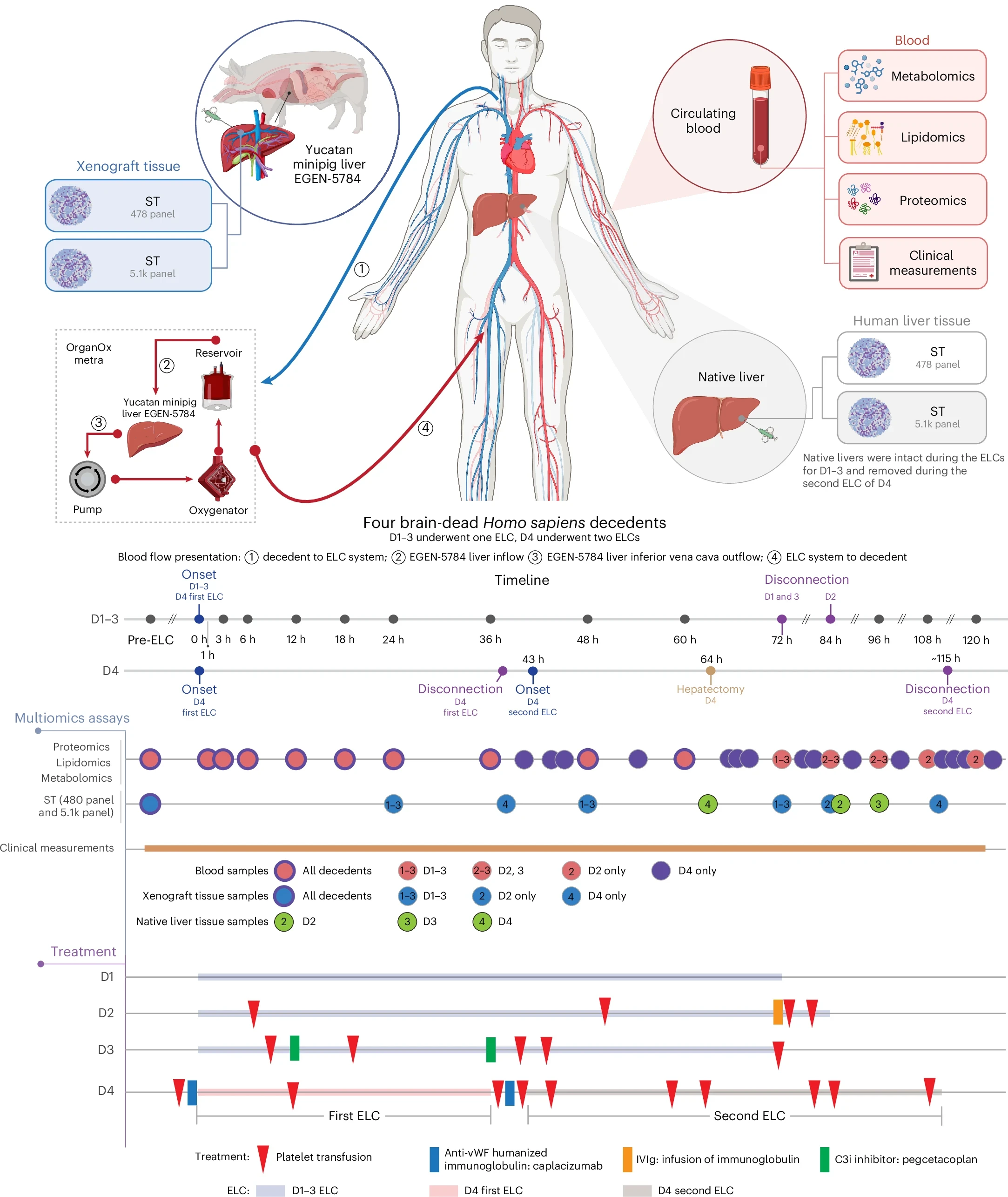
This
To understand how the human body and the pig liver interact, researchers conducted extensive multiomics profiling (analyzing proteins, lipids, and metabolites in the blood) and spatial transcriptomics (analyzing gene expression in tissue tissues) across five ELC procedures in four brain-dead human decedents.
Key Findings:
-
Immune Cell Infiltration: The pig livers maintained their physical structure during the 72-84 hour procedures. However, researchers observed a progressive infiltration of human immune cells—predominantly inflammatory macrophages and neutrophils—into the pig liver. Simultaneously, the pig's own resident immune cells (T cells and Kupffer-like macrophages) decreased.
-
Divergent Complement and Coagulation Activity: The complement system (part of the immune system) showed mixed results. Human complement levels were suppressed, but pig complement levels (specifically C3 and C5) remained elevated. Interestingly, as human coagulation (blood clotting) factors dropped, the pig liver began synthesizing and releasing porcine coagulation factors, providing supplementary clotting support, particularly when the human's native liver was removed.
-
Thrombocytopenia (Severe Platelet Loss): All recipients experienced a rapid, severe drop in blood platelets shortly after ELC began. The study found that human platelets were clustering and becoming sequestered within the pig liver. This is likely driven by interactions with activated pig endothelial cells, which were found to express high levels of porcine von Willebrand factor (vWF), a protein that binds human platelets.
-
Metabolic Support: The xenografts successfully provided essential liver functions, including clearing bilirubin, supporting energy metabolism, detoxifying ammonia, and synthesizing transport proteins. However, overall circulating lipid (fat) levels remained low when relying exclusively on the pig liver for support.
Conclusion:
The study proves that gene-edited pig livers can provide vital metabolic and coagulation support to humans for short periods. However, it also highlights significant cross-species incompatibilities—most notably, severe platelet depletion and pig-derived immune activation. Understanding these exact mechanisms provides a roadmap for developing targeted therapies (such as pig-specific complement or vWF inhibitors) to improve the safety and viability of temporary liver xenoperfusion in the future.
Link to Journal


